A Guide to Praying Psalm 23: Finding God’s Presence in Every Line
7 min read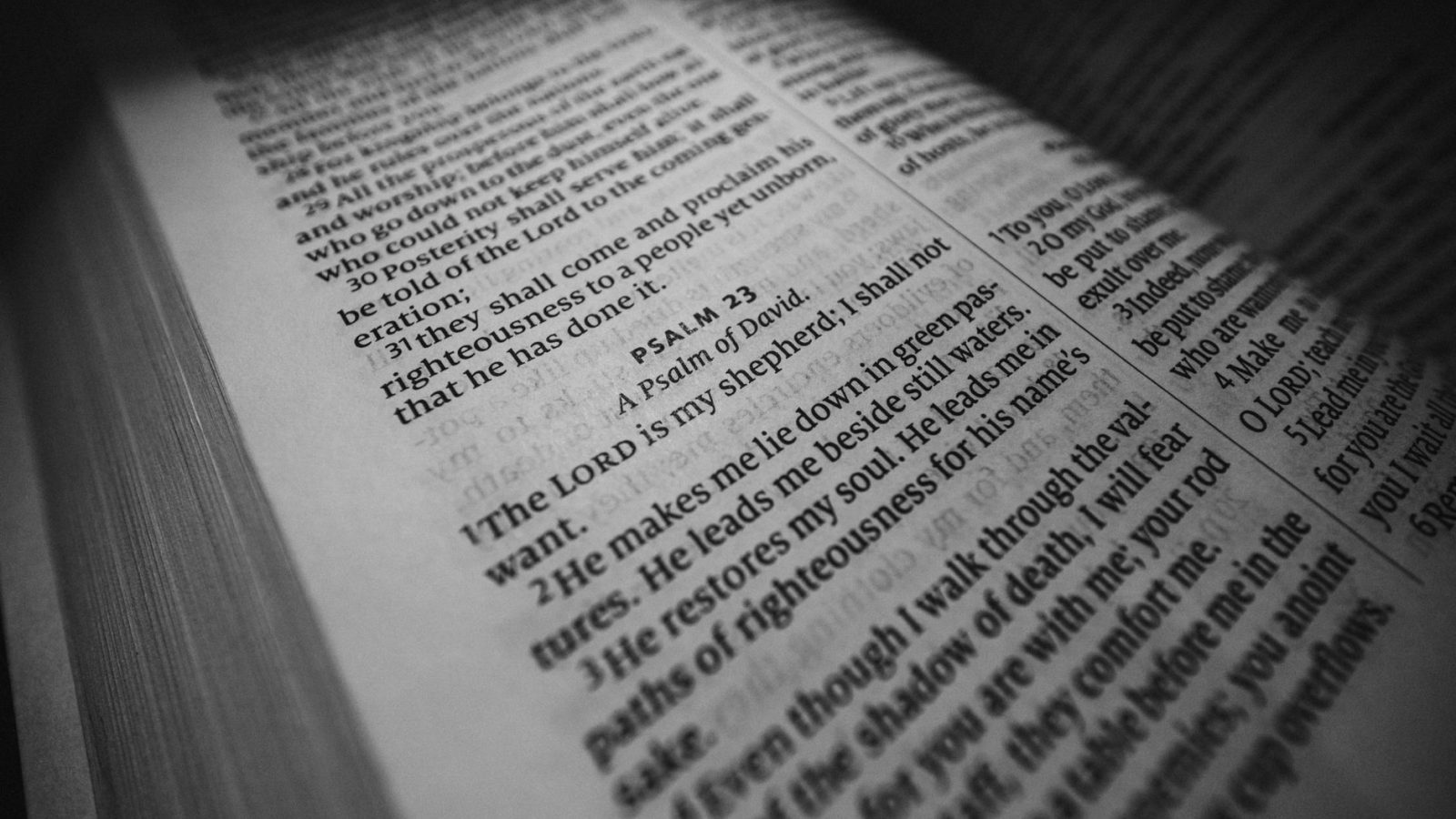
Praying Psalm 23 means reading each verse slowly, pausing to speak it back to God as your own honest prayer. You can do this aloud or silently, alone or with others. The psalm covers fear, grief, rest, and hope — so whatever you are carrying tonight, there is a line for it.
What Does It Mean That God Is Your Shepherd?
The psalm opens with a declaration: Yahweh is my shepherd: I shall lack nothing. That single sentence is both a statement of faith and a prayer. When you pray it, you are not claiming that life is easy or that nothing will ever go wrong. You are claiming that God is present and that his presence is enough.
A shepherd in the ancient world did not wave a wand and make wolves disappear. A shepherd walked with the flock, knew every sheep by name, and placed his own body between the animals and danger. That is the image behind this verse.
When you pray this line, you can say something like: ‘God, I am saying out loud that you are my shepherd — not because I feel it perfectly right now, but because I want to trust it. I choose to believe that you are with me.’
If that feels like a stretch, that is all right. Faith does not have to feel certain to be real. Praying toward a truth you are still learning to hold is still prayer.
When You Need Rest: The Green Pastures and Still Waters
Psalm 23:2 speaks of being led to green pastures and still waters. Psalm 23:3 follows with the image of a soul being restored. These verses address something most of us need desperately but rarely ask for directly: genuine rest.
Praying these verses is an act of permission — you are giving God room to slow you down. Many people carry exhaustion so long that they forget rest is something they are allowed to want.
A prayer drawn from these verses might sound like: ‘Lord, I am tired in ways I cannot always explain. Lead me to the still place. Restore what has worn down in me. I do not have to earn quiet — let me receive it from you.’
If you are dealing with burnout, chronic illness, or depression, please know that praying for rest and seeking medical or counseling support are not opposites. God works through both, and reaching out for help is not a failure of faith.
The Valley of the Shadow: How to Pray When You Are Afraid
Psalm 23:4 is probably the most famous line in the psalm, and it is also the most honest. It does not say you will avoid the dark valley. It says you will walk through it and that God will be with you there.
Notice the word through. The valley is not your final destination. The psalm does not promise that God will explain every hard thing or remove every sorrow. It promises presence. That is not a small promise — it is the biggest one available.
When you are frightened — by a diagnosis, a relationship falling apart, a loss you cannot make sense of — you can pray: ‘God, I am in the valley right now and I cannot see the way out. I am not asking you to explain it yet. I am just asking you to walk with me. Be near.’
Anxiety and grief are real, and they deserve real support. If fear is overwhelming your daily life, please consider speaking with a counselor or therapist alongside your prayer life. God is not offended by your need for human help.
The Table in Front of Your Enemies: Praying Through Conflict
Psalm 23:5 introduces a striking image: a table prepared in the presence of enemies. This is not a picture of revenge or triumph over others. It is a picture of God’s provision being so present and so close that even the hard circumstances surrounding you cannot cancel it.
Praying this verse is a way of acknowledging that your difficulties are real — you are not pretending the enemies or the hard people or the painful situations do not exist — while also declaring that God’s goodness is more present than any of them.
You might pray: ‘Lord, there are things pressing in on me right now that feel bigger than my strength. And yet you set a table. You provide even here. Help me notice your goodness in the middle of what is hard, not just after it is over.’
Praying the Whole Psalm as a Daily Rhythm
You do not need to pray all of Psalm 23 in one sitting every day. Some people choose one verse and sit with it for an entire week. Others read the whole psalm slowly each morning as a way of handing the day to God before it begins.
A simple practice: read the psalm aloud once. Then read it again, pausing after each verse to say what comes to mind honestly. You do not have to use formal language. God is not grading your sentence structure.
You can also use the psalm at night as a way of reviewing the day. Which verse felt most true today? Which verse felt hardest to believe? Bring both of those to God. The honest questions are as welcome as the confident declarations.
If you are new to prayer and this feels awkward, that is completely normal. Awkward prayer is still prayer. The psalm itself was written out of real human experience — grief, fear, gratitude, trust — and it can hold yours too.
What the Last Verse Promises
Psalm 23:6 closes the psalm with a declaration about goodness and mercy following all the days of the psalmist’s life, and a confident hope of dwelling in God’s house forever. This is the note the whole psalm is building toward.
Praying this verse is an act of trust about the future when the future feels uncertain. You are not claiming that every day will be easy. You are claiming that goodness and mercy are following you — active, pursuing, present — even on the days you cannot feel them.
This verse connects to the larger Christian hope described in passages like Romans 8:38-39 and John 14:1-3 — that nothing finally separates those who belong to God from his love, and that there is a home beyond the valleys of this life.
A closing prayer from this verse might be: ‘Lord, I do not know what tomorrow holds. But I am choosing to believe that your goodness is following me, even when I cannot see it. Keep me dwelling close to you — today, and in whatever comes next.’
Starting Simply: A First Step If You Have Never Prayed Before
If this is your first time praying or you feel completely unsure how to begin, here is the most direct advice: just read Psalm 23 out loud and let the words be your prayer. You do not have to add anything.
The ancient words themselves are a prayer. Generations of people have borrowed them exactly as written when they had no words of their own. If that is where you are tonight, you are in good company.
You might simply say before you begin: ‘God, I am not sure I know how to do this. But I am here. I am going to read these words and I am asking you to hear them as mine.’ That is enough. That is a real prayer.
As you read Psalm 23:1 today, pause and say aloud: ‘God, I am choosing to call you my shepherd — even in the parts of my life where I feel most lost. I trust that you know where I am.’
When you reach the valley verse, stop and name honestly what valley you are in right now. Speak it plainly to God. You do not have to dress it up. Then ask simply for his presence in that specific place.
At the table verse, ask God to help you notice one concrete sign of his provision in your life today — something small is fine. Thank him for it out loud, even if other things are still hard.
Close your time with the psalm by praying the last verse as a declaration over your week: ‘Goodness and mercy are following me. I belong to God. I am held — today and always.’
Frequently Asked Questions
Can I pray Psalm 23 for someone else who is sick or grieving?
Yes — Psalm 23 has long been prayed on behalf of others, especially during illness, dying, and grief. You can read it aloud over a loved one, or pray each verse as an intercession by replacing ‘I’ with their name. Many people have found this practice deeply comforting for both the person praying and the one being prayed for.
How often should I pray Psalm 23?
There is no required frequency. Some people pray it daily as a morning anchor; others return to it in seasons of particular difficulty. What matters more than frequency is attentiveness — reading it slowly enough to let individual verses actually land. Even once a week, practiced with real attention, can be transformative over time.
Do I need to memorize Psalm 23 to pray it?
Memorization is a gift if it comes naturally to you, because it means the psalm is available to you in moments when you have no Bible nearby — lying awake at 3 a.m., sitting in a waiting room, or facing something sudden and frightening. But it is not a requirement. Reading it from a page or a screen is completely valid prayer.
What if I pray Psalm 23 and still feel afraid or alone?
That is an honest and common experience, and it does not mean your prayer failed or your faith is broken. Feelings often lag behind truth, and the psalm itself was written by someone who clearly knew fear and darkness firsthand. Keep praying it, and if fear or grief is significantly affecting your daily life, please reach out to a counselor or trusted pastor — prayer and professional support work well together.
Which version or translation of Psalm 23 is best for praying?
The best version is the one you can actually understand and engage with honestly. The King James Version carries a weight and familiarity that many people find comforting. Modern translations like the World English Bible or the New International Version make the language more immediately accessible. Try reading the psalm in two or three versions side by side — noticing where the wording differs can actually deepen your engagement with it.
Continue Reading
How Do I Trust God With My Finances? A Biblical Guide for Real Life
Trusting God with finances is a daily practice, not a formula. Learn biblical steps, honest prayer, and practical wisdom for seeking His kingdom first…
What Does the Bible Say About Giving? A Plain-Language Guide for Every Stage of Faith
Wondering what the Bible says about giving? This plain-language guide explores scripture about giving, tithing, generosity, and how to build a giving…
What Jesus Meant by ‘I Am the Way, the Truth, and the Life’
What did Jesus mean by 'I am the way the truth and the life'? A plain, pastoral explanation of John 14:6 for seekers and new believers.