What Is the Trinity? A Plain-Language Guide for Seekers and New Believers
6 min read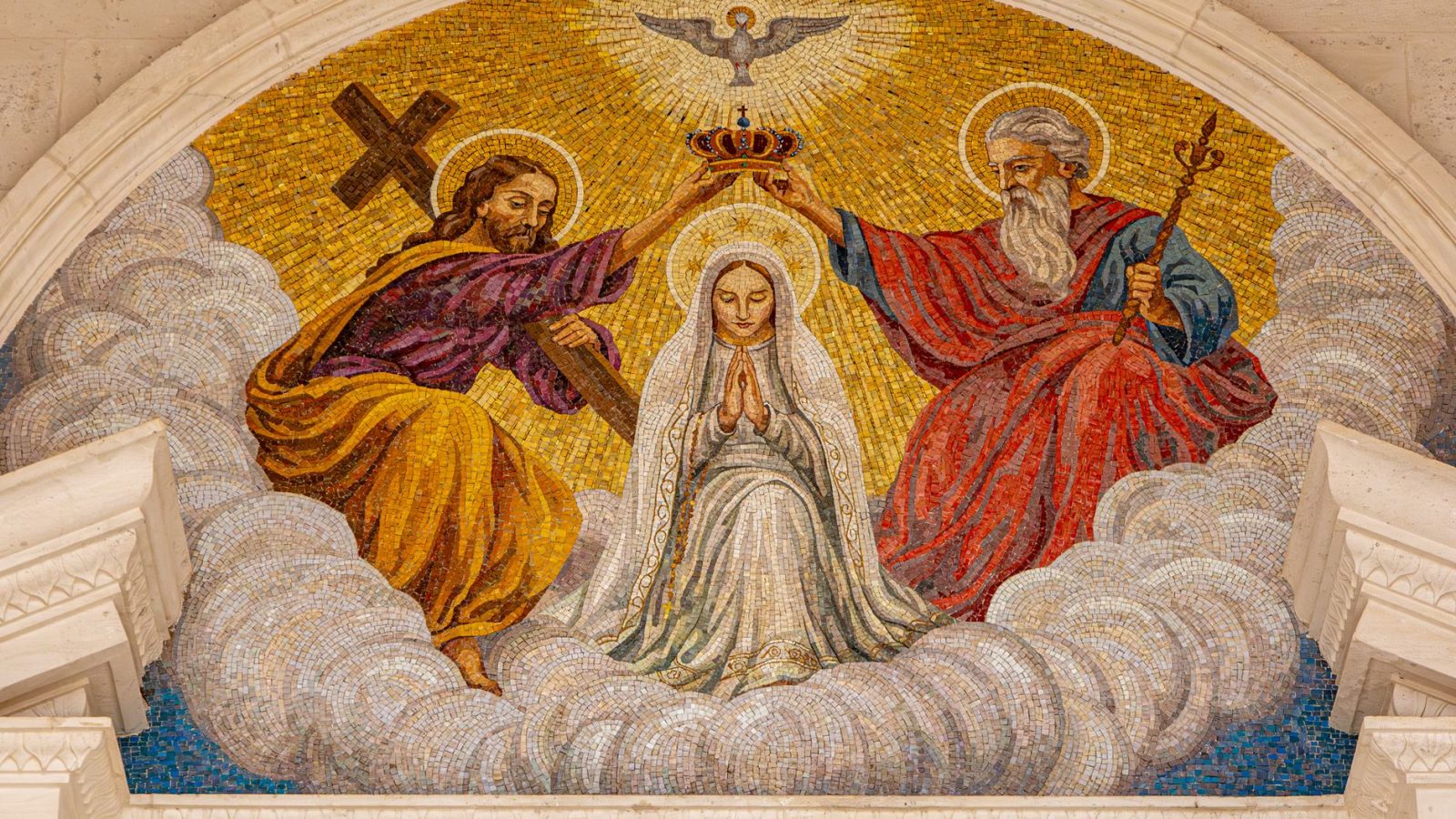
The Trinity is the Christian belief that one God exists as three distinct persons: the Father, the Son (Jesus Christ), and the Holy Spirit. They are not three gods, but one God in three persons — equal in nature, distinct in role, and united in purpose throughout Scripture.
Where Does the Word ‘Trinity’ Come From?
The word ‘Trinity’ does not appear in the Bible. That surprises some people, but it shouldn’t shake your confidence. The word is a theological shorthand — a label the early church developed to describe something the Bible does teach clearly.
Think of the word ‘Bible’ itself. That word isn’t in the Bible either, but we use it to describe the collection of books Scripture presents as God’s Word. ‘Trinity’ works the same way — it names a pattern woven throughout both the Old and New Testaments.
Early Christians didn’t invent the Trinity as an idea. They wrestled with what Scripture actually said about the Father, the Son, and the Spirit, and ‘Trinity’ became the most precise word for what they found.
One God, Not Three — Why That Matters
The foundation of the Trinity is strict monotheism — the belief that there is only one God. The Old Testament makes this unmistakably clear (see Deuteronomy 6:4 and Isaiah 45:5). Christianity did not abandon this conviction. It deepened it.
When Jesus came, his followers — Jewish men and women who had worshipped one God their entire lives — gradually came to recognize him as fully divine. They didn’t decide to believe in two gods. They came to understand that the one God they had always known was more complex, more relational, than any of them had imagined.
The Trinity holds both truths together at once: there is one God, and within that one God there are three distinct persons. Neither truth cancels the other.
Who Are the Three Persons?
The Father is the first person of the Trinity. He is the Creator, the source of all things, the one Jesus addressed in prayer throughout the Gospels. He is not a distant or angry God — Jesus described him as a loving father running toward a returning child (see Luke 15:20).
The Son is Jesus Christ, the second person of the Trinity. The Gospel of John opens by declaring that the Word — Jesus — was with God and was God, and that this Word became flesh and lived among us (see John 1:1, 14). Jesus is fully God and fully human: not half of each, but the complete mystery of both.
The Holy Spirit is the third person of the Trinity. Jesus promised his disciples that after he returned to the Father, the Spirit would come to guide, comfort, and teach them (see John 14:16-17). The Spirit is not a force or an energy — he is a person who speaks, grieves, and intercedes (see Romans 8:26).
Our anchor verse places all three persons side by side in a single command: baptism is performed ‘in the name of the Father and of the Son and of the Holy Spirit’ (Matthew 28:19). Notice it says name, not names — one name, three persons.
A Helpful Way to Think About It
Every human analogy for the Trinity breaks down eventually — and that’s actually okay. God is not obligated to fit inside a comparison you can draw on a napkin. Still, analogies can help you get your footing.
One common comparison is water: the same substance can exist as liquid, ice, or steam. This helps with the idea of one essence in different expressions, but it falls short because water doesn’t exist as all three forms simultaneously, and the Father, Son, and Spirit are always present at the same time.
A better starting point may simply be relationship. The Trinity shows us that God is not a solitary being who became relational when he created humans. God is relational in his very nature — the Father, Son, and Spirit have existed in loving communion eternally. When 1 John 4:8 says God is love, the Trinity explains how that could be true before anything else existed.
What the Trinity Means for Your Daily Life
This isn’t just a doctrine to pass a theology test. The Trinity is practical, personal, and alive.
When you pray, you are approaching the Father through the Son, empowered by the Spirit (see Ephesians 2:18). Each person of the Trinity is actively involved in your relationship with God. You are not talking to a wall — you are welcomed into a communion that has existed before time.
When you face something overwhelming — grief, illness, uncertainty — the Spirit intercedes for you in prayer when you don’t have the words (see Romans 8:26). You do not need to have perfect theology or perfectly articulate prayers. The Spirit carries what you cannot carry.
When you wonder whether God truly understands human suffering, the answer the Trinity gives is yes. The Son took on human flesh, walked through real grief and real pain, and was raised from the dead. Your suffering is not beneath God’s notice — it was entered into by God himself.
What About the Parts That Still Feel Confusing?
It’s completely honest to say: the Trinity is a mystery. That word doesn’t mean ‘something we gave up trying to understand.’ It means something real that exceeds full human comprehension — the way a three-year-old genuinely knows her mother’s love without being able to explain neuroscience or psychology.
The early church councils — particularly Nicaea in 325 AD and Constantinople in 381 AD — spent enormous energy defining the boundaries of what the Trinity is not. They ruled out the idea that Jesus was a lesser god, a created being, or simply a mode God wore like a costume. These boundaries matter, even if the mystery inside them remains large.
If you are still wrestling, that is not a sign of weak faith. Some of the greatest theologians in Christian history spent lifetimes on this question and still knelt before it in worship rather than claiming they had it fully solved.
A Starting Place If You Want to Respond
You don’t need to master Trinitarian theology before you come to God. What you need is a willing heart.
If you are a seeker who isn’t sure what you believe yet, you can simply tell God that. Something like: ‘I don’t fully understand you, but I want to. Would you make yourself known to me?’ That is a prayer he honors.
If you are a new believer who just found this teaching, spend time in John chapters 14 through 17 — often called Jesus’s ‘farewell discourse.’ In those chapters, Jesus speaks directly about his relationship to the Father and the Spirit in language that is intimate, clear, and life-changing.
And if someone in your life is also asking this question, you don’t have to have all the answers ready. You can simply say, ‘I’m learning too — let’s find out together.’ That kind of honesty is its own form of witness.
Father, I come to you honestly — there is much about you I don’t fully understand. Thank you for not requiring me to have everything figured out before I can come close.
Jesus, thank you for becoming human — for entering into a world like mine, with real pain and real limits. Help me trust that you understand what I’m carrying today.
Holy Spirit, when I don’t know how to pray or what to say, please intercede for me. Teach me to recognize your presence and follow your leading.
Triune God — Father, Son, and Spirit — I want to know you, not just know about you. Draw me deeper, and give me patience for the mystery I cannot yet fully see.
Frequently Asked Questions
Is the Trinity mentioned in the Bible?
The word ‘Trinity’ doesn’t appear in the Bible, but the teaching is present throughout it. Matthew 28:19, John 1:1-14, and passages like 2 Corinthians 13:14 show the Father, Son, and Holy Spirit acting together as one God. The early church coined the term to describe what Scripture consistently reveals.
Does believing in the Trinity mean Christians worship three gods?
No. Christianity is strictly monotheistic — there is one God. The Trinity teaches that this one God exists in three distinct persons: Father, Son, and Holy Spirit. They share one divine nature and are never separated, but they are genuinely distinct from one another in person and role.
Why does it matter whether Jesus is fully God or just a great teacher?
If Jesus is only a great teacher, his death is a tragedy and nothing more. The Christian claim is that because Jesus is fully God and fully human, his death atones for sin and his resurrection conquers death on behalf of all who trust him. The stakes of the question are eternal, not merely academic.
What role does the Holy Spirit play in everyday life?
The Holy Spirit is described in Scripture as a counselor, comforter, and guide who lives within believers. He helps you understand the Bible, intercedes when you can’t find words to pray, and produces qualities like love, peace, and patience in your character over time. He is not an impersonal force — he is the present, active person of God in your daily life.
Is it okay to still have questions about the Trinity?
Yes, absolutely. Wrestling with this teaching honestly is not a sign of doubt or weak faith — it’s a sign that you are taking God seriously. Many mature believers hold the Trinity with deep conviction and open hands at the same time, worshipping a God who is greater than any definition they can fully contain.
Continue Reading

How Do I Trust God With My Finances? A Biblical Guide for Real Life
Trusting God with finances is a daily practice, not a formula. Learn biblical steps, honest prayer, and practical wisdom for seeking His kingdom first…

What Does the Bible Say About Giving? A Plain-Language Guide for Every Stage of Faith
Wondering what the Bible says about giving? This plain-language guide explores scripture about giving, tithing, generosity, and how to build a giving…
What Jesus Meant by ‘I Am the Way, the Truth, and the Life’
What did Jesus mean by 'I am the way the truth and the life'? A plain, pastoral explanation of John 14:6 for seekers and new believers.