Can I Pray Anywhere? Yes — and Here’s What That Really Means
6 min read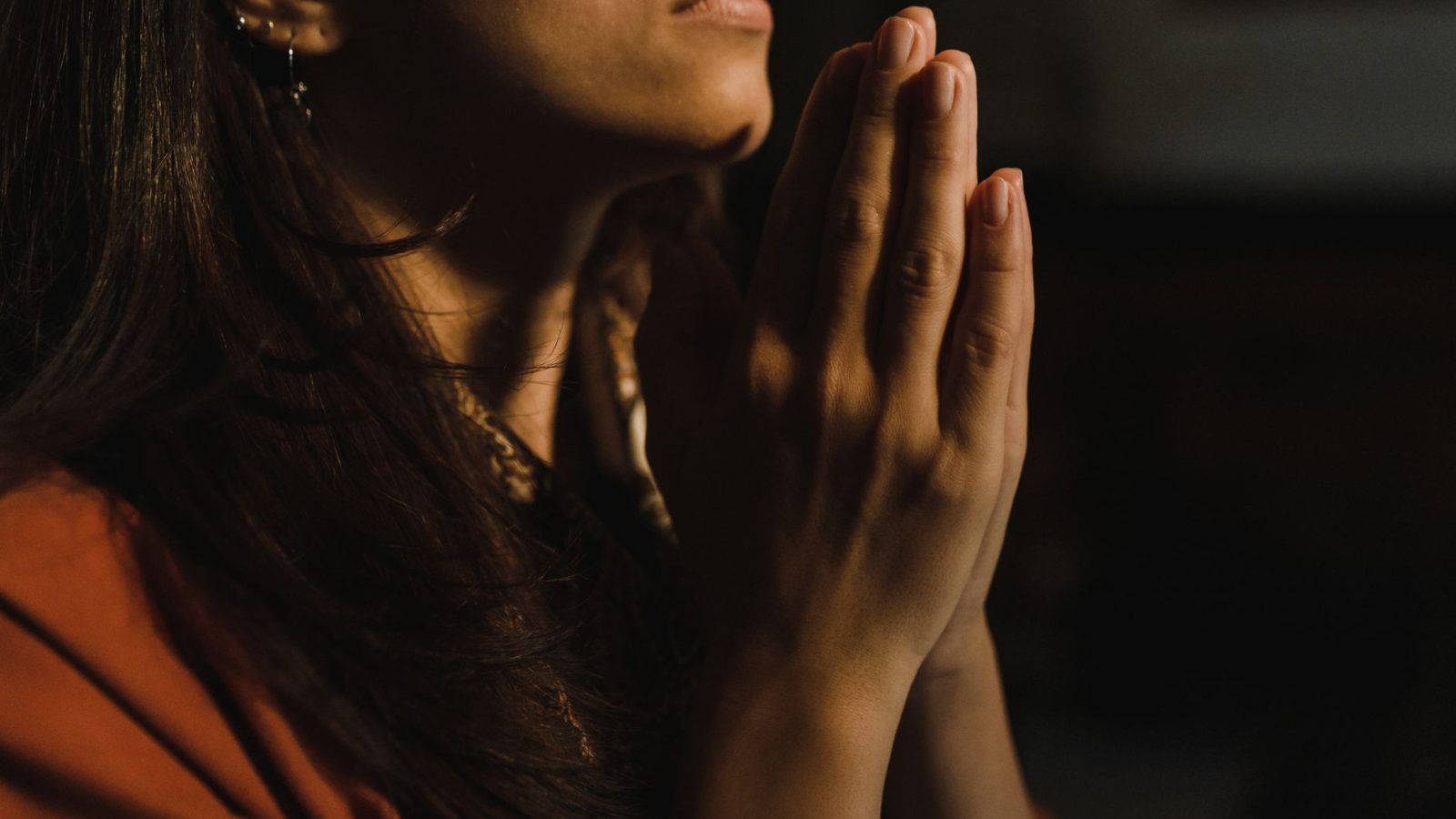
Yes, you can pray anywhere. The Bible teaches that God hears prayer in every place — at home, at work, in a car, in a hospital, or on a sleepless night. No special building, posture, or formula is required. What matters is a willing heart turned toward God.
Where Did People Pray in the Bible?
A quick walk through Scripture reads almost like a list of unusual places. Daniel prayed by an open window with the city of Babylon just outside (Daniel 6:10). Jonah prayed from the belly of a large fish (Jonah 2:1). Paul and Silas prayed in a Roman jail cell at midnight (Acts 16:25). Elijah prayed under a broom tree in the desert while asking to die (1 Kings 19:4).
Jesus himself prayed on mountainsides, in gardens, at the graveside of a friend, and from a cross (Luke 6:12; John 17:1; John 11:41-42; Luke 23:34). None of these are places we would design for a sacred encounter. And yet in every one of them, God was present and listening.
This is not a coincidence in the biblical record — it is the point. God does not live in one ZIP code. He is not confined to a sanctuary or a Sunday morning. You do not have to drive anywhere to reach him.
What About Posture, Words, and ‘Doing It Right’?
One of the most common reasons people hesitate to pray is the quiet fear that they are doing it wrong. Maybe you do not know the right words. Maybe you are sitting instead of kneeling. Maybe your mind keeps wandering. Maybe you have not prayed in years and it feels awkward to start again.
Paul mentions ‘lifting up holy hands’ in 1 Timothy 2:8 — a posture common in Jewish and early Christian worship. But across Scripture, people pray lying facedown (Matthew 26:39), sitting (2 Samuel 7:18), standing (Mark 11:25), and simply crying out with no recorded posture at all (Psalm 18:6). The diversity of postures in the Bible is itself a kind of permission. Your body does not have to be in a specific position for your soul to be heard.
The same grace applies to words. Romans 8:26 tells us that the Spirit intercedes for us when we do not know what to pray. You are allowed to come to God with a sentence fragment. You are allowed to come with tears and no words at all. The requirement is not eloquence — it is honesty.
Does God Actually Hear Me in Ordinary Places?
Yes. The theological term is God’s omnipresence — his presence everywhere at once — and it is not just a doctrine for seminary students. It is a practical comfort for a person stuck in traffic, sitting in a waiting room, or lying awake at 2 a.m. Psalm 139:7-8 asks where one could possibly go to flee from God’s presence, and the answer implied is: nowhere.
This means the kitchen table is a valid altar. The parking lot outside a difficult meeting is a valid place to pause and ask for help. The shower, the commute, the hospital chair beside someone you love — all of it is within the hearing of God.
You do not need to wait until you get to a better place or a better moment. The moment you are in right now is enough.
Are There Times When Prayer Feels Impossible?
Sometimes grief, anxiety, or exhaustion can make prayer feel like shouting into a wall. That experience is real, and it does not mean you have failed spiritually. Some of the most anguished prayers in Scripture — the psalms of lament, Job’s raw protests, Jesus’s cry of dereliction in Matthew 27:46 — are not polished. They are honest to the point of pain.
If you are in a season of deep depression or crippling anxiety, please know that reaching out to a counselor, therapist, or doctor is not a sign of weak faith. God works through human care and medicine as well as through prayer. Both belong together, and there is no shame in needing both.
In those hard seasons, a prayer can be as short as: ‘God, I cannot find the words. I am here. Please be near.’ That is enough. That is, in fact, a prayer.
What About Praying Together with Others?
While you can absolutely pray alone anywhere, the New Testament also holds communal prayer in high regard. Jesus’s promise in Matthew 18:20 about being present where two or three gather in his name is a beautiful picture of shared prayer strengthening community.
Praying with others — a spouse, a friend, a small group, a congregation — adds a dimension that solo prayer cannot fully replicate. You hear someone else give voice to needs you share. You learn that you are not alone in your questions or your struggles.
That said, if you have no community right now, that is not a barrier. Start where you are, alone if necessary. Community can grow from the seed of a solitary, honest prayer.
Practical Ways to Pray in Every Place
Knowing that you can pray anywhere is one thing. Building a habit of actually doing it is another. Here are a few concrete ways people do this in ordinary life.
Transition prayers. Every time you get in a car, walk through a door, or sit down at a desk, use that transition as a prompt. A single sentence — ‘God, be with me in this’ — counts.
Breath prayers. A breath prayer is a short phrase you can say in a single breath. Phrases drawn from passages like Psalm 23:1, Psalm 46:10, or Luke 18:13 have anchored Christians for centuries. Choose one that fits your season, and return to it throughout the day.
Written prayers. If spoken prayer feels unnatural, write. A journal, an app, even a notes document on your phone can hold your prayers. Writing slows you down and often surfaces honesty that rushing past wouldn’t reveal.
Eyes-open prayer. You do not have to close your eyes. Some people find that praying while looking at the world around them — a sky, a face, a difficult situation — keeps prayer connected to reality rather than drifting into abstraction.
A Simple Place to Start Tonight
If you are new to prayer or returning after a long absence, the most important thing is not to find the perfect method — it is to begin. God is not grading your technique.
You are already in the right place, because the right place is wherever you are. The verse from 1 Timothy is not a command to find a holy location. It is an invitation to bring your whole ordinary life — every place, every moment — into conversation with God.
Start small. Start honest. Start now.
Wherever you are right now, take a breath and say: ‘God, I’m here. I’m not sure I know how to do this well, but I believe you hear me. Thank you for not requiring me to go somewhere else to reach you.’
If you are carrying something heavy today, try this: ‘God, I bring this to you — this worry, this grief, this question I can’t answer. I don’t need to have it resolved right now. I just need to know you’re with me in it.’
If prayer has felt distant or dry: ‘God, I don’t feel close to you right now, and I’m being honest about that. I’m asking you to close the distance. I’m here, in this ordinary place, and I’m turning toward you.’
At the end of your day, wherever you are: ‘Thank you for today — even the parts that were hard. You were in all of it. Let me rest in that tonight.’
Frequently Asked Questions
Do I need to be in a church to pray?
No. While gathering with other believers in a church is valuable and encouraged in the New Testament, prayer itself is not limited to any building or location. The Bible records God hearing prayers offered in fields, jails, fish, gardens, and homes. A church building is a good place to pray — but it is one option, not a requirement.
Is it okay to pray silently, or does prayer have to be spoken out loud?
Silent prayer is completely valid. Hannah prayed silently in 1 Samuel 1:13 — her lips moved but her voice was not heard — and God still answered. Spoken prayer can be powerful, especially in community, but God is not limited by sound waves. He knows your thoughts before you form them (Psalm 139:4).
Can I pray even if I've done something wrong or haven't talked to God in a long time?
Yes. The parable Jesus tells in Luke 15:11-24 pictures a father running toward a returning child who has been away for a long time. That image is specifically about the character of God toward people who return to him. You do not need to clean yourself up first — the returning is the starting point.
Does my posture matter when I pray — kneeling, standing, hands folded?
Posture can be a meaningful expression of reverence or humility, but no single posture is required. Scripture shows people praying in many different positions. The condition of your heart matters far more than the position of your body. Use whatever posture helps you focus and be present.
What if I don't know what to say when I pray?
That is a very common experience, and the Bible addresses it directly in Romans 8:26 — the Spirit helps us when we do not know how to pray. You are not expected to arrive at prayer with a prepared speech. Short, honest, incomplete words are entirely welcome. ‘Help,’ ‘thank you,’ and ‘I don’t know’ are all valid prayers.
Continue Reading

How Do I Trust God With My Finances? A Biblical Guide for Real Life
Trusting God with finances is a daily practice, not a formula. Learn biblical steps, honest prayer, and practical wisdom for seeking His kingdom first…
What Does the Bible Say About Giving? A Plain-Language Guide for Every Stage of Faith
Wondering what the Bible says about giving? This plain-language guide explores scripture about giving, tithing, generosity, and how to build a giving…
What Jesus Meant by ‘I Am the Way, the Truth, and the Life’
What did Jesus mean by 'I am the way the truth and the life'? A plain, pastoral explanation of John 14:6 for seekers and new believers.