How Can I Become a Better Christian Parent? How to Leave a Spiritual Legacy That Lasts Forever
6 min read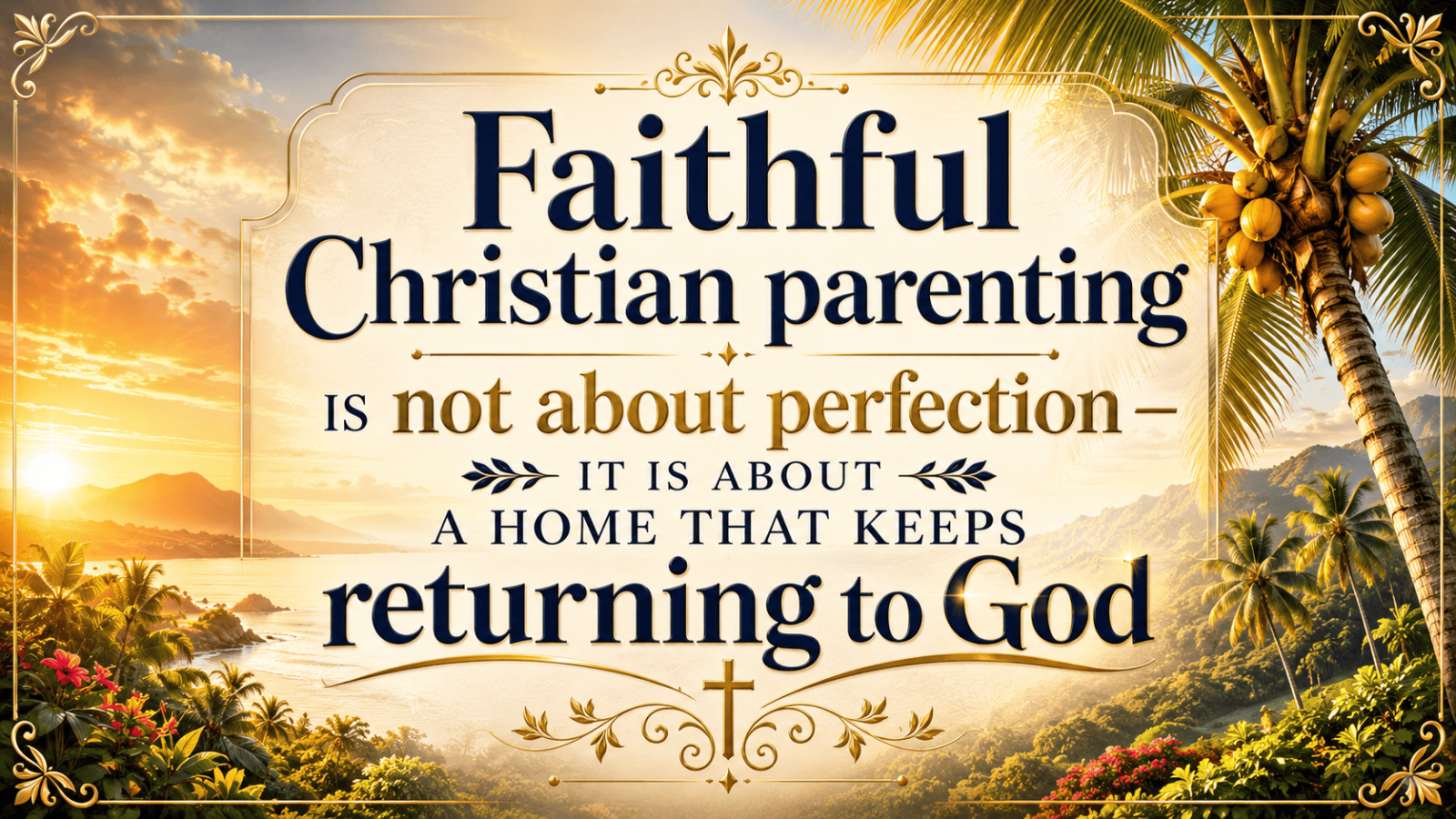
Becoming a better Christian parent begins with anchoring your home in Scripture, prayer, and honest relationship with your children. Model faith daily, admit your failures openly, and ask God for wisdom through every season. Christian parenting is less about perfection and more about consistent, grace-filled presence.
Start With Your Own Faith, Not Your Children’s Behavior
The most powerful thing you can do for your children is let them watch you actually believe. Children are extraordinarily good at detecting the gap between what a parent says on Sunday and how that parent lives on Wednesday.
That does not mean you need to be spiritually polished. It means letting your kids see you open your Bible when you are confused, pray when you are scared, and apologize when you have been wrong. Those moments teach more than any curriculum.
James 1:5 promises that God gives wisdom generously to anyone who asks. Make that request a daily habit — before the morning gets loud, before the school drop-off, before the hard conversation. A parent who asks God for wisdom is already parenting differently.
Your Home Is Already a Discipleship Environment
You do not need a formal devotional program to disciple your children, though those can help. Deuteronomy 6:7 describes faith being spoken about when you sit, walk, lie down, and rise up — meaning the ordinary hours of the day are the primary classroom.
Dinner table conversations about what is true and good, car rides where you talk honestly about something hard you read in the news, bedtime prayers that name real fears by name — these are not extras. They are the curriculum.
Start small if you are just beginning. One honest question at dinner — “What did you see today that made you wonder about God?” — is more valuable than a structured lesson that no one enjoys.
Grace Is Not the Absence of Boundaries
Some parents hear the word “grace” and worry it means lowering expectations or ignoring wrong behavior. That is not what Scripture means. Grace is unearned love — and it operates alongside truth, not instead of it.
Ephesians 6:4 instructs parents not to provoke their children to anger, but to bring them up in the discipline and instruction of the Lord. Both parts matter. Boundaries without warmth produce resentment. Warmth without boundaries produces confusion.
When you correct your child, say clearly what the behavior was, why it matters, and that your love is not in question. That pattern — truth spoken inside secure relationship — is the shape of how God deals with us, and it is worth imitating.
What to Do When You Have Already Gotten It Wrong
If you are reading this because you feel like you have failed your children — through absence, anger, divorce, addiction, or simply years of distraction — please hear this plainly: grace is the whole point of the gospel, and it reaches backward as well as forward.
You cannot undo the past, but you can begin today with honesty. Telling your child, at any age, “I was wrong, and I am sorry, and I am asking God to help me do better” is not weakness. It is one of the most spiritually formative things a parent can say.
If the weight of past mistakes involves trauma, grief, or patterns that feel too heavy to carry alone, please consider speaking with a pastoral counselor or licensed therapist. Prayer and professional help belong together — seeking both is wisdom, not failure.
Praying Specifically for Your Children
Many Christian parents pray about their children — worried prayers, reactive prayers — without praying for them with intention. There is a difference, and your children will feel it over time.
Pray by name, and pray Scripture back to God. Philippians 4:6 invites you to bring every anxiety to God with thanksgiving. You can pray that your child would know God personally (Jeremiah 29:13), that they would walk in wisdom (Proverbs 2:6), and that they would know they are loved without condition.
Consider writing prayers for each child in a notebook. There will be hard seasons when you cannot feel anything, and having written words to return to keeps the practice going when emotion does not.
The Long View: What Proverbs 22:6 Actually Promises
Proverbs 22:6 is sometimes read as a guarantee: train your child correctly and they will never leave the faith. But that reading puts a burden on you that Scripture does not actually place there, and it can devastate parents whose adult children have walked away.
The proverb is a wisdom statement — a general pattern observed across generations, not a binding contract with a money-back clause. God honors faithful parenting. He also honors the free will He gave every human being, including your children.
Your job is faithfulness, not control of outcomes. You plant, you water, you pray, and you trust the God who loves your child even more than you do. That is the long view — and it is the only view that will sustain you across twenty years of parenting.
Do not measure your faithfulness by your child’s current choices. Measure it by whether you showed up, prayed honestly, modeled repentance, and kept the door open. That is the work of a Christian parent.
Practical Places to Begin This Week
If you want to take a concrete next step, pick one thing from this list and do it before the week is out. Start one family prayer at dinner — even a two-sentence prayer said out loud. Tell your child one true thing you love about who they are becoming. Apologize for something specific if you owe one.
Find a church community, if you are not already in one. Christian parenting was never meant to happen in isolation. You need people who will pray with you, encourage you, and occasionally look you in the eye and tell you the truth. Hebrews 10:24-25 is not optional encouragement — it is structural advice for how faith survives.
Finally, extend to yourself the same grace you are trying to extend to your children. You will get things wrong this week. So will every other parent reading this. The goal is not a flawless record — it is a life and a home that keeps returning to God, season after season, year after year.
Ask God to show you one specific area of your parenting where you need His wisdom most right now — and sit quietly for a moment after you ask.
Pray your child’s full name aloud, and tell God what you love about them and what you are afraid of for them. Trust that He already knows, and that naming it matters.
Confess to God any parenting failure that has been sitting heavy on you. Receive the forgiveness that 1 John 1:9 describes, and ask Him to show you any repair work He is inviting you to do.
Close by thanking God for choosing you to be this particular child’s parent — not because you are perfect, but because He knew what He was doing when He placed them in your care.
Frequently Asked Questions
What does the Bible say is the most important thing in Christian parenting?
Scripture consistently points to loving God with your whole heart and passing that love on through daily life, not just formal religious instruction (Deuteronomy 6:5-7). The most important thing is that your children see genuine, lived faith — faith that prays, repents, and trusts God in hard moments. No program replaces that.
What if my child is rejecting the faith I raised them in?
This is one of the most painful experiences a Christian parent can carry, and it does not automatically mean you failed. Proverbs 22:6 is a wisdom pattern, not a guarantee of every individual outcome. Keep the relationship open, keep praying by name, and trust that God pursues your child with a love that outlasts any season of wandering.
How do I talk to young children about faith without it feeling forced?
Young children learn through story, routine, and the emotional tone of home — not through formal lectures. Read Bible stories together, pray in simple and honest language they can understand, and answer their questions about God with genuine curiosity rather than scripted answers. The goal is helping them feel that faith is natural to your family’s life.
Can I be a good Christian parent if I am a single parent or if my co-parent does not share my faith?
Yes. God is fully aware of your household’s makeup and is not limited by it. Many children have come to deep, lasting faith through one committed parent. Focus on what you can do — consistent prayer, honest conversation, a loving and stable environment — and trust God with what is outside your control. You are not parenting alone.
How do I balance discipline with showing grace to my children?
Grace and loving discipline are not opposites — Scripture holds them together throughout. Clear, consistent boundaries communicated within a warm relationship reflect how God parents us: He corrects because He loves, not instead of loving. When you discipline, always make sure your child knows the correction is about the behavior, and that your love and their belonging in the family are never in question.
Continue Reading

The Power of a Changed Life: What We Can Learn From the Woman at the Well?
What does John 4:28–29 mean? Discover how one encounter with Jesus transformed the Samaritan woman and learn why your testimony has the power to lead other

What Does the Bible Say About Tithing? The Truth About Tithing and Stewardship
Wondering what is tithing and what the Bible really says about it? This plain, pastoral guide walks seekers and new believers through scripture, history…

What Does the Bible Say About Generosity? A Plain Guide for Seekers and New Believers
Wondering what the Bible says about generosity? This plain-language guide explores key scriptures, practical steps, and a short prayer guide for seekers…