How Do I Forgive My Spouse? God’s Secret to Healing Broken Hearts Through Forgiveness
6 min read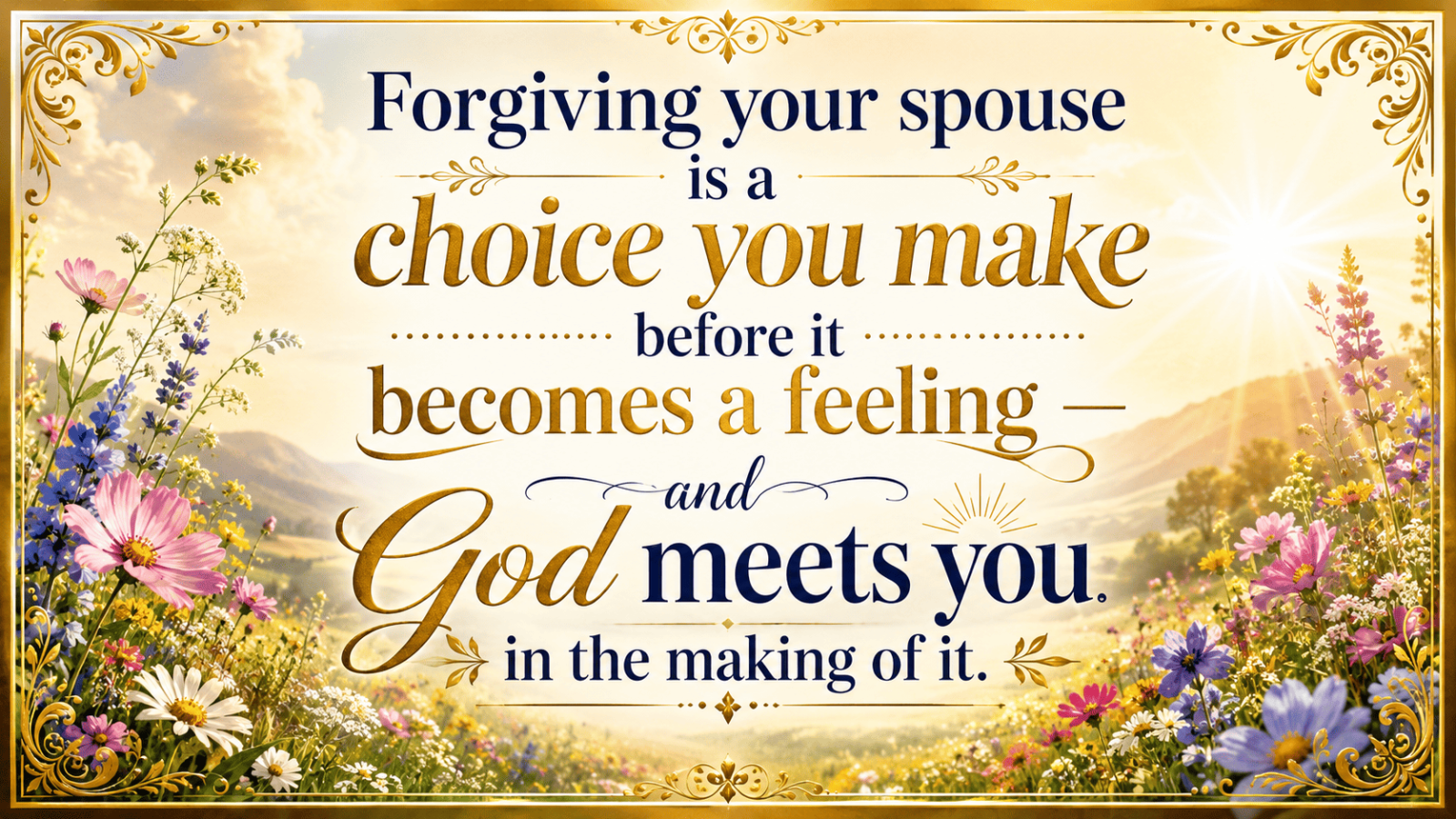
Forgiving your spouse means choosing, with God’s help, to release the debt you feel they owe you — not because the hurt wasn’t real, but because God has forgiven you far more. It is a decision made before it is a feeling, and it can be renewed daily through prayer and honest grace.
What Forgiveness Actually Is (and What It Is Not)
Forgiveness is not the same as saying what happened was acceptable. It is not pretending the injury never occurred, and it is not a guarantee that the relationship automatically returns to what it was before.
Forgiveness is a decision to release your spouse from the debt you feel they owe you. It means you stop demanding — in your heart, before God — that they pay for what they did through your ongoing punishment or your closed-off spirit.
It is also not a single moment. For serious wounds, forgiveness is something you may choose again tomorrow morning, and the morning after that, until the choice slowly becomes a feeling and the feeling slowly becomes freedom.
This distinction matters because many people give up on forgiving their spouse when the anger returns the next day. That returning anger does not mean you failed. It means you are human, and it is simply an invitation to choose again.
Why God Connects Your Forgiveness to His
Jesus makes a striking connection in Matthew 6:14: the forgiveness you extend to others is bound up with the forgiveness you receive from God. This is not a threat. It is a description of how the grace-filled life actually works.
When you have genuinely reckoned with how much God has forgiven you — the weight of it, the cost of it — something shifts in how you view the person who hurt you. They are no longer a uniquely terrible person; they are a fellow broken human being standing in the same need of mercy you carry.
This does not minimize what your spouse did. It simply places it on a scale large enough to hold it. See also Ephesians 4:32 and Colossians 3:13, which both ground the command to forgive others directly in the forgiveness God has already given you.
If you have never personally received that forgiveness from God, or if it feels distant right now, that is actually the best place to start — not with your spouse, but with a quiet moment of honesty before God about your own need for grace.
What Happens in Your Heart When You Refuse to Forgive
Withholding forgiveness feels powerful at first. It can seem like the only leverage you have left. But over time, unforgiveness does its quiet damage — not primarily to the person who wronged you, but to you.
Bitterness is described in Hebrews 12:15 as a root that spreads and defiles. It does not stay in one corner of your heart. It seeps into how you pray, how you sleep, how you see your own future.
This is not a guilt trip. It is a pastoral warning from someone who has watched good people shrink under the weight of a grudge they believed they had every right to carry. You may have every right to it. But it is still costing you more than you know.
Choosing to forgive your spouse is, among other things, an act of self-care — one rooted not in self-help but in the mercy of God available to you right now.
Practical Steps Toward Forgiving Your Spouse
Name the wound honestly before God. Do not rush past what actually happened. Bring it into prayer with full honesty — what was done, how it made you feel, what it cost you. God is not shocked by your anger or your grief. The Psalms are full of both.
Separate forgiveness from trust. You can forgive your spouse completely and still require changed behavior before extending trust again. Forgiveness is given; trust is rebuilt over time through consistent action. These are two different things and confusing them will exhaust you.
Pray for your spouse by name. This is one of the most practical tools available to you. Not a prayer that they change so you feel better, but a genuine prayer for their good, their growth, their own encounter with God. Jesus instructs this in Matthew 5:44. It is hard. It also works.
Speak it aloud — to God, and possibly to them. There is something that shifts when forgiveness moves from a private resolve to a spoken word. Whether you speak it in prayer, in a counseling session, or directly to your spouse (if that is safe and appropriate), voicing it carries weight.
If the hurt was severe — abuse, chronic betrayal, deep deception — please do not attempt to process this alone. A trained Christian counselor or therapist can hold space for both your faith and your pain at the same time. Seeking professional help is not a failure of faith; it is wisdom.
When You Have Forgiven but the Pain Keeps Coming Back
Many people believe they have not truly forgiven their spouse because they still feel hurt. This is one of the most common misunderstandings in Christian life.
Forgiveness is a choice of the will. Healing is a process of time. The two happen on different timelines, and that is normal. Emotional pain after forgiveness does not mean you have taken back the forgiveness — it means you are still in the healing process.
Be patient with yourself. Grief over a marriage wound is real grief. It deserves space and tenderness, not condemnation. Romans 8:1 holds a promise that speaks directly into that kind of shame.
If weeks stretch into months and the pain feels immovable, or if you notice signs of depression or anxiety that are affecting your daily life, please reach out to a professional. Prayer and therapy are not opposites. They were made to work together.
What Forgiveness Can and Cannot Fix
Forgiveness does not automatically repair a marriage. It opens the door. Whether healing and reconciliation follow depends on many things — including whether your spouse takes responsibility, whether both of you are willing to do the work, and whether the situation is safe.
Some marriages, after genuine forgiveness, do find their way to something deeper and more honest than what existed before. That is a real and beautiful possibility. But forgiveness does not obligate that outcome, and the absence of full reconciliation does not mean forgiveness failed.
What forgiveness does reliably accomplish is this: it frees you from being owned by what was done to you. It returns your story to God’s hands. And in a life of faith, that is not a small thing — it is the whole thing.
A Place to Begin Right Now
You do not have to feel ready. You do not have to have it sorted out. You only need to be willing to be willing — to bring what you are carrying to God and ask for help to take the first step.
The grace that forgives you is the same grace that will help you forgive. That is the heart of Matthew 6:14. You are not being asked to do this alone, and you are not being asked to do it perfectly. You are simply being invited to begin.
Lord, I am honest with you right now about what happened and how much it hurt. I am not pretending it was small. I bring the full weight of it to you.
I choose today — not because I feel it yet, but because you ask me to — to release [name] from the debt I feel they owe me. I hand this to you. I cannot carry it the way you can.
God, I ask you to work in my heart so that this choice slowly becomes a feeling and the feeling slowly becomes freedom. Meet me in the gap between where I am and where I want to be.
Teach me to receive your forgiveness more deeply, so that what I give to my spouse flows from what I have already been given. Let your grace be the source, not my own effort.
Frequently Asked Questions
Does forgiving my spouse mean I have to stay in the marriage?
No. Forgiveness and reconciliation are related but separate things. You can fully forgive someone and still make the difficult decision to separate, particularly in situations involving abuse or ongoing harm. Forgiveness releases the debt in your heart; it does not require you to remain in an unsafe or destructive situation.
What if my spouse hasn't apologized or doesn't think they did anything wrong?
Forgiveness is something you offer from your side, regardless of whether the other person acknowledges the wrong. This is hard, but it means your freedom is not held hostage to their willingness to repent. You are releasing them for your sake before God, not as a verdict on whether they deserve it.
How long does forgiving a spouse take?
There is no fixed timeline, and anyone who gives you one is doing you a disservice. The initial decision to forgive can happen in a moment of prayer; the emotional healing that follows can take months or years depending on the depth of the wound. Be as patient with your own healing as you are trying to be with your spouse.
Is it a sin if I struggle to forgive my spouse?
Struggling is not the same as refusing. The fact that you are reading this and genuinely trying is itself an act of faithfulness. God sees the willing heart. Bring your struggle honestly to him in prayer rather than hiding it, and ask for the grace to take the next small step.
Can a Christian counselor help with forgiving a spouse?
Absolutely, and for many people it is one of the most helpful things they do. A counselor trained in both faith and relational dynamics can help you process the hurt in a safe environment, work through what forgiveness looks like practically in your situation, and support your marriage through the rebuilding process. Seeking help is a sign of wisdom, not weakness.
Continue Reading

How Do I Trust God With My Finances? A Biblical Guide for Real Life
Trusting God with finances is a daily practice, not a formula. Learn biblical steps, honest prayer, and practical wisdom for seeking His kingdom first…
What Does the Bible Say About Giving? A Plain-Language Guide for Every Stage of Faith
Wondering what the Bible says about giving? This plain-language guide explores scripture about giving, tithing, generosity, and how to build a giving…
What Jesus Meant by ‘I Am the Way, the Truth, and the Life’
What did Jesus mean by 'I am the way the truth and the life'? A plain, pastoral explanation of John 14:6 for seekers and new believers.