The Legacy That Matters Most: What Does the Bible Say About Raising Children?
6 min read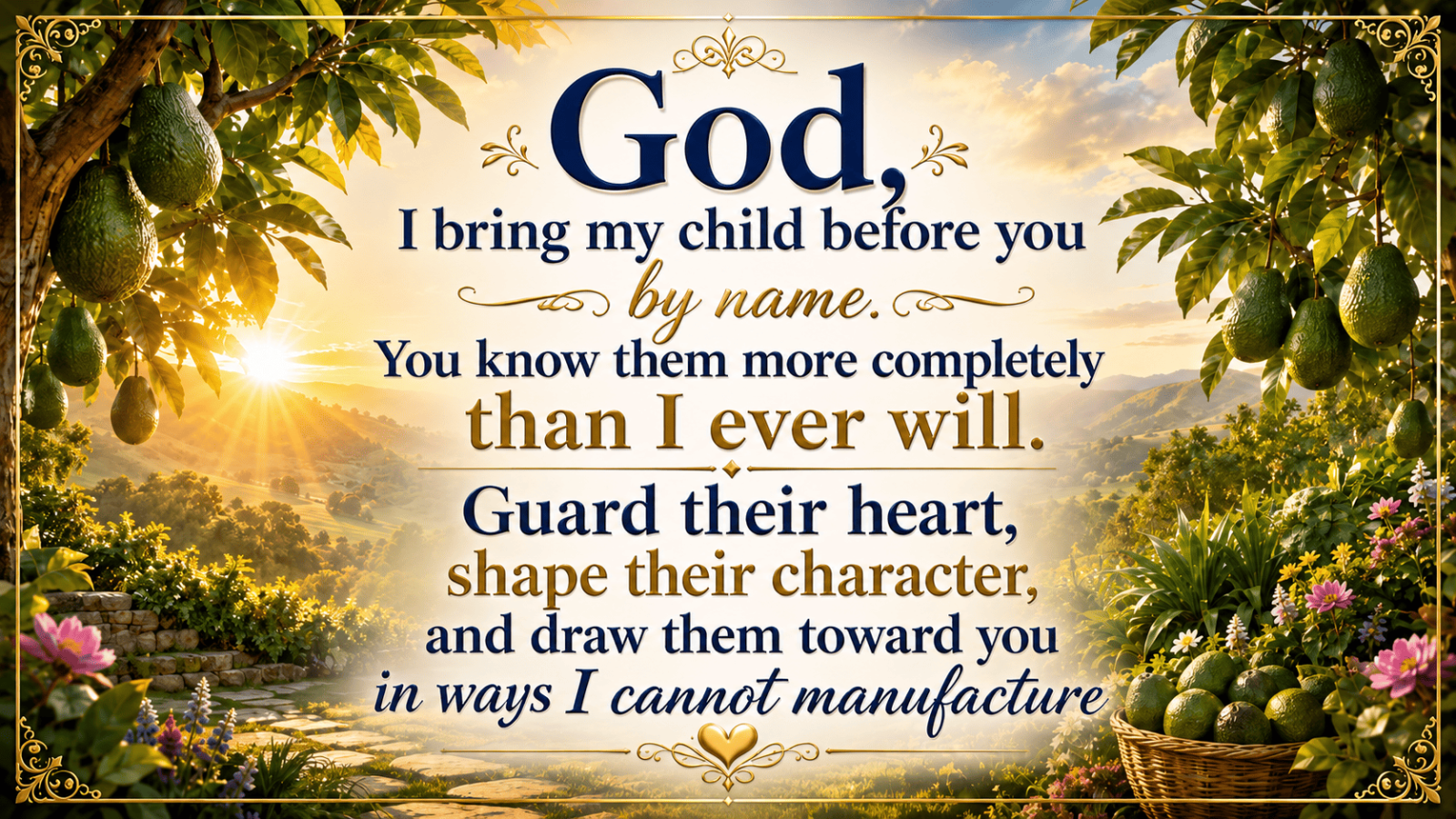
The Bible on raising children centers on teaching God’s word consistently, disciplining with love, modeling faithfulness, and trusting God with the outcome. Key passages call parents to instruct daily, correct gently, and raise children in an atmosphere of grace, prayer, and unconditional love.
God Expects Parents to Teach, Not Just Tell
The anchor verse from Deuteronomy 6 is directed first at the parent’s own heart. Before a word reaches your child, God’s commands are supposed to live inside you. You cannot pour from an empty vessel, and Scripture takes that seriously.
Notice the rhythm Moses describes: sitting at home, walking on the road, lying down, rising up. This is not a Sunday-morning curriculum. It is life itself treated as the classroom.
That means the Bible’s model of parenting is less about formal instruction and more about constant, casual, honest conversation about who God is and what He has done. Faith gets transmitted in the car, at the dinner table, and during bedtime — not only in a church building.
If that feels overwhelming, remember: you do not need to have every answer. You need to be willing to keep talking. A parent who says ‘I don’t know, but let’s find out together’ is already teaching their child something true about humility and seeking God.
What the Bible Says About Discipline
The book of Proverbs speaks often about correction and discipline. Passages like Proverbs 13:24 and Proverbs 22:15 reflect a culture and time quite different from ours, so it is worth reading them carefully and in their full context rather than pulling single lines out of place.
The New Testament adds a crucial balance. Ephesians 6:4 explicitly tells fathers not to provoke their children to wrath — a command that guards against harsh, crushing discipline that breaks rather than shapes a child’s spirit.
Biblical discipline is always in service of love, never a substitute for it. Its goal is a child who can one day govern themselves with wisdom and gentleness, not a child who merely obeys out of fear.
If you are wrestling with questions about discipline and are unsure where the line is, talking to a pastor, a family counselor, or a trusted mentor is both wise and completely compatible with seeking God’s guidance. Scripture and professional support are not in competition with each other.
Children Are a Gift, Not a Project
Psalm 127:3 describes children as a heritage from the Lord — a gift, not an achievement. That single idea can reframe an entire parenting philosophy.
A gift is received with gratitude. It is stewarded, not controlled. The moment parenting becomes primarily about producing a certain outcome or reflecting well on us, something quietly shifts in the wrong direction.
Jesus himself placed a child in the center of his disciples’ circle and told them that the kingdom of God belongs to those who receive it as a child does (see Mark 10:14-15). Children are not problems to be solved on the way to adult faith. They carry something worth paying attention to.
This does not mean outcomes don’t matter — they do. But it does mean your child is first and foremost God’s, entrusted to your care for a season. That truth is both humbling and deeply freeing.
The Role of Grace When You Fall Short
No parent in Scripture is a perfect parent. Abraham was absent and wavering. David was loving but tragically inattentive to his household. Even the prodigal son’s father — the closest image in Scripture to God’s own fatherhood — had a son who walked away.
If you have yelled too much, been distracted too often, or made choices you regret, the Bible’s answer is not shame — it is repentance and restoration. First John 1:9 assures believers that confession opens the door to God’s forgiveness and cleansing.
Your imperfection does not disqualify you from being used by God in your child’s life. It actually makes you a more honest witness to the grace you are trying to pass on.
Apologizing to your child when you are wrong is not weakness. It is one of the most powerful things you can model. It shows them what it looks like to need grace — and to receive it.
Praying for Your Children Is Part of the Work
Job 1:5 records that Job offered sacrifices for his children regularly — interceding for them out of faithful, ongoing concern. Long before the New Testament, Scripture recognized that a parent’s spiritual labor on behalf of a child is real and significant.
Paul’s letters are filled with examples of intercession for people he loved (see Philippians 1:3-4 and Colossians 1:9-12). That same posture belongs to parents who want to cover their children in prayer — specific, honest, persistent prayer.
You do not need formal language or a long list of requests. A prayer that says ‘God, I love this child and I don’t know what they need today, but you do — please be near them’ is a complete and faithful prayer.
Prayer for your children is not a backup plan for when parenting gets hard. It is a first response and a daily practice, woven into the same ordinary moments Moses describes in Deuteronomy 6.
What About Children Who Walk Away from Faith?
This is a real question, and it deserves a real answer rather than a tidy promise. Proverbs 22:6 is one of the most quoted parenting verses in Scripture, and one of the most misapplied. It is a general wisdom principle, not a guarantee — and treating it as a guarantee has caused enormous pain to faithful parents whose children have made different choices.
Children are not machines. They are image-bearers with their own will, their own wounds, and their own journey. A parent who raised a child faithfully in the Word is not automatically responsible for every turn that child’s life takes in adulthood.
If your child has walked away from faith, grief is the right response — not guilt as your primary posture. The father in the parable of the prodigal son (Luke 15:11-32) did not chase his son into the far country. He waited, watched, and ran when he saw him returning.
Continue praying. Continue loving without strings attached. And please, if the grief is heavy, allow yourself support from a pastor, a counselor, or a community of other parents who understand. That is not giving up — that is wisdom.
A Simple Way to Start Today
You do not need a five-year plan. You need one honest conversation, one prayer spoken aloud in front of your child, one moment when you let them see that you take God seriously.
Start with the rhythm Deuteronomy 6 describes. Pick one ordinary moment today — breakfast, bedtime, a drive to school — and say something true about God. It does not need to be polished. It needs to be real.
Read one passage of Scripture with your child this week. Ask them what they notice. Let them ask questions you cannot answer. Sit with the mystery together.
Faithful parenting is built from thousands of small, unspectacular moments. Each one matters more than you know.
Lord, I ask for wisdom I do not have on my own. Show me how to be present with my child today — not perfect, but present and honest about who you are.
God, I bring my child before you by name. You know them more completely than I ever will. Guard their heart, shape their character, and draw them toward you in ways I cannot manufacture.
Father, where I have fallen short as a parent — through impatience, distraction, or fear — I ask for your forgiveness and your restoration. Let my failures become places where your grace is visible, even to my children.
Lord, give me eyes to see the ordinary moments today as sacred ground. Help me to talk about you naturally, honestly, and often — not as a performance but as a reflection of how much I actually need you.
Frequently Asked Questions
What is the most important Bible verse about raising children?
Deuteronomy 6:6-7 is widely considered the foundation — it calls parents to internalize God’s words themselves first and then teach them continuously through everyday life. Proverbs 22:6 and Ephesians 6:4 are also frequently referenced. No single verse captures the whole picture; the Bible’s teaching on parenting is woven across many books and contexts.
Does the Bible promise that if I raise my child right, they will follow God?
Proverbs 22:6 is often read this way, but most biblical scholars understand it as a general wisdom principle rather than an ironclad guarantee. Children are individuals with their own will and their own relationship with God to pursue. Faithful parenting creates conditions for faith to grow, but it cannot produce faith on its own — that remains a work of God’s grace.
What does the Bible say about discipline and punishment for children?
Proverbs addresses correction and discipline in several passages, always framed within the context of love for the child’s long-term good. Ephesians 6:4 adds a New Testament check by warning parents not to provoke their children to anger. Biblical discipline aims to shape character, not simply control behavior, and should always be balanced with warmth, patience, and relationship.
How do I teach my child about God if I don't feel confident in my own faith?
Deuteronomy 6 calls parents to keep God’s words in their own heart first — which means your own faith formation matters as much as your child’s. Starting where you are, being honest about your questions, and learning alongside your child is itself a powerful form of discipleship. Many parents find that raising children actually deepens their own faith, because the questions children ask demand real answers.
Can single parents or non-traditional families follow what the Bible teaches about raising children?
Yes. While many biblical passages address a two-parent household reflecting the cultural context of ancient Israel, the core call — to love your child, teach them about God, pray for them, and model grace — applies to every family structure. Scripture also shows God’s special care for those raising children alone, and the wider church community is meant to support parents who need it.
Continue Reading

How Do I Trust God With My Finances? A Biblical Guide for Real Life
Trusting God with finances is a daily practice, not a formula. Learn biblical steps, honest prayer, and practical wisdom for seeking His kingdom first…
What Does the Bible Say About Giving? A Plain-Language Guide for Every Stage of Faith
Wondering what the Bible says about giving? This plain-language guide explores scripture about giving, tithing, generosity, and how to build a giving…
What Jesus Meant by ‘I Am the Way, the Truth, and the Life’
What did Jesus mean by 'I am the way the truth and the life'? A plain, pastoral explanation of John 14:6 for seekers and new believers.