The Kind of Love Every Marriage Needs According to the Bible: What Is a Godly Marriage?
7 min read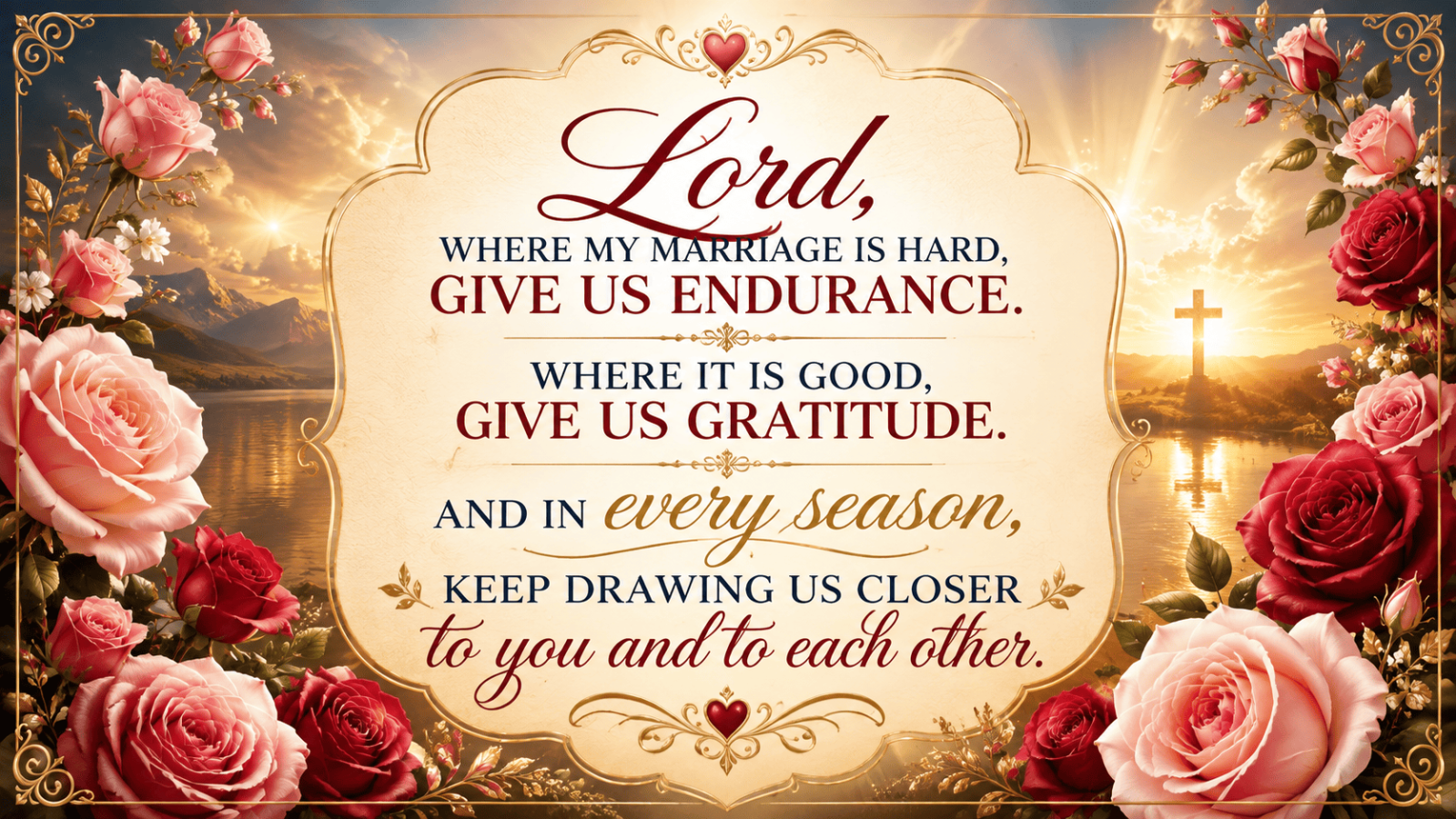
A godly marriage is a covenant between a husband and wife grounded in Christ-like love, mutual respect, and faithful commitment. It reflects the relationship between Christ and the Church — sacrificial, serving, and enduring. It is not perfect, but it is purposefully oriented toward God and one another.
The Foundation Is a Covenant, Not a Contract
Contracts are transactional. Two parties agree to trade something of value, and if one side fails, the deal is off. A covenant is different. It is a binding promise that holds even when circumstances change, because it is rooted in character and commitment rather than convenience.
The Bible frames marriage as a covenant from the very beginning (Genesis 2:24). God is named as a witness to the covenant of marriage in Malachi 2:14. This matters, because it means a godly marriage is not simply a relationship between two people — it is a relationship in which God is present and interested.
This is not meant to feel heavy or burdensome. It is actually freeing. When your marriage is grounded in something larger than your feelings on any given day, it has a foundation that feelings alone cannot provide. You are not holding it together by sheer willpower. You are building on something solid.
What Sacrificial Love Actually Looks Like
The anchor verse for this article, Ephesians 5:25, sets the standard for husbands plainly and at great cost: love your wife the way Christ loved the church — and Christ gave himself for it. That is not romantic poetry. That is a description of a love that lays down comfort, preference, and pride for the sake of another person.
This kind of love is not reserved only for dramatic moments. It shows up in the ordinary ones — who apologizes first, who carries more when the other is struggling, who listens when listening is hard. Sacrificial love is a daily practice, not a one-time declaration.
Scripture also calls wives to honor and respect their husbands (Ephesians 5:22-24, 33), and the entire passage in Ephesians 5 is set inside a broader instruction for all believers to submit to one another in love (Ephesians 5:21). A godly marriage is never a hierarchy of one person dominating another. It is two people choosing to serve each other — and that mutuality is the heartbeat of it.
If someone has used these scriptures to justify control, manipulation, or abuse, that is a serious distortion of the text. God’s design for marriage never includes harm. If you are in a harmful relationship, please reach out to a pastor, counselor, or a domestic violence resource. Prayer and professional help belong together.
God Is Part of the Marriage
A godly marriage is sometimes described as a triangle — God at the top, husband and wife at the two lower corners. The closer each person draws to God, the closer they naturally draw to each other. This is not just a nice diagram. It describes something that holds true in practice.
When both spouses are rooting their lives in prayer, scripture, and worship — individually and together — they bring a kind of patience and forgiveness into their relationship that is genuinely difficult to manufacture on their own. Colossians 3:12-14 describes the qualities that come from being clothed in Christ: compassion, kindness, humility, gentleness, patience, and above all, love.
This does not mean a godly marriage requires spiritual perfection from both partners. Many marriages have one spouse who believes and one who does not, or one who is growing faster than the other. The call is to remain faithful in your own walk and to pray for your partner, trusting God with the parts you cannot control (1 Corinthians 7:14).
Communication and Forgiveness Are Not Optional
You will hurt each other. This is not pessimism — it is honesty. Two imperfect people living in close proximity will inevitably wound each other, sometimes intentionally, more often by accident or thoughtlessness. A godly marriage does not pretend otherwise.
Ephesians 4:26 gives a remarkably practical instruction: do not let the sun go down on your anger. The goal is not to suppress conflict but to resolve it quickly and honestly, before bitterness has time to take root. This requires learning how to speak the truth in love (Ephesians 4:15) — which means being honest without being cruel.
Forgiveness in marriage is not a feeling. It is a choice, made sometimes repeatedly for the same offense, that releases the debt and refuses to keep score. Colossians 3:13 calls believers to forgive as the Lord has forgiven them. That is a high standard, and it is also the only standard that keeps a marriage alive over decades.
If communication has broken down severely, a Christian counselor or therapist is not a sign of failure — it is a wise use of the tools God has placed in the world. Seeking help is an act of humility, and humility is a mark of a godly marriage.
A Godly Marriage Pursues Holiness, Not Just Happiness
This might sound discouraging at first. But consider what it actually means: happiness is an outcome that depends on circumstances. Holiness is a direction — a constant turning toward God and toward goodness, regardless of how the circumstances feel.
A marriage oriented toward holiness will produce genuine joy far more reliably than a marriage oriented only toward feeling good. When both spouses are growing in patience, generosity, and grace, the marriage becomes a place where both people are becoming more fully themselves — not less.
This is what theologians mean when they say marriage is sanctifying. It is not comfortable in every moment, but it shapes you. The friction of living closely with another person, navigated with prayer and intention, gradually smooths away selfishness and builds character. Proverbs 27:17 describes this dynamic: iron sharpens iron.
Practical Steps Toward a Godly Marriage Starting Today
If you are not yet married and are searching for a godly spouse, begin by asking who this person is becoming, not just who they are today. Are they teachable? Are they honest? Do they take responsibility for their failures? Character is the foundation everything else is built on.
If you are already married and want to move toward something more godly, start with prayer — together if possible, alone if necessary. Ask God to show you where you have been selfish or unkind. Then take one concrete step: write a note of appreciation, have the conversation you have been avoiding, or make an appointment with a counselor.
Read Ephesians 5:22-33 and 1 Corinthians 13 together. Not to audit your spouse — to audit yourself. Ask honestly: Am I loving this person the way these passages describe? That question, taken seriously, will do more for your marriage than almost anything else.
Find a community of other believers who take marriage seriously. You cannot build a godly marriage in isolation. You need people who will speak honestly into your life, celebrate your milestones, and pray with you in the hard seasons.
When a Godly Marriage Is Hard
Difficulty in marriage does not mean God has abandoned you, and it does not mean you are doing it wrong. Even the most devoted, scripture-rooted couples pass through seasons of grief, illness, financial pressure, infertility, betrayal, and loss. These things are not punishments — they are the landscape of a human life.
What godly marriage offers in those seasons is not immunity from pain but companionship through it. And it offers the resources of prayer, community, and scripture — not as magic solutions, but as genuine sustenance. Psalm 34:18 promises that God is near to the brokenhearted.
If your marriage is in a place of genuine crisis — from addiction, infidelity, abuse, or mental illness — please do not try to hold it together alone with only willpower and prayer. Reach out to your pastor, a licensed Christian counselor, or a crisis line. God works through people, and asking for help is an act of faith, not a failure of it.
Lord, show me where I have been choosing my own comfort over my spouse’s good — and give me the courage to change one thing today.
Father, I confess that I have not always loved sacrificially. Teach me what it means to love the way Christ loves — with patience I do not naturally have.
God, I bring my marriage to you right now, in whatever state it is in. I trust that you are present in it, and I ask you to do what only you can do in both of us.
Lord, where my marriage is hard, give us endurance. Where it is good, give us gratitude. And in every season, keep drawing us closer to you and to each other.
Frequently Asked Questions
Can a marriage be godly if only one spouse is a Christian?
Yes, a marriage can still reflect godly values even when one partner does not share the same faith. Scripture in 1 Corinthians 7:12-16 addresses this directly, encouraging the believing spouse to remain faithful and to live out their faith with patience. Your consistent love and integrity are a witness that words alone cannot match.
What does the Bible say about roles in a godly marriage?
Ephesians 5:22-33 describes a husband’s role as sacrificial servant-leadership modeled after Christ, and a wife’s role as a partner who honors that leadership. Crucially, Ephesians 5:21 sets the entire passage inside a call for mutual submission among all believers. Godly marriage is not about dominance but about two people willingly serving each other.
Is a struggling marriage still a godly marriage?
Struggle does not disqualify a marriage from being godly — it is part of the territory. What makes a marriage godly is not the absence of conflict but the commitment to address it with honesty, forgiveness, and a shared orientation toward God. Seeking counseling during hard seasons is a wise and faithful choice, not a sign of failure.
How do we build spiritual intimacy in our marriage?
Spiritual intimacy grows through shared practices: praying together, reading scripture together, worshipping in community, and talking honestly about your faith and doubts. Even five minutes of prayer together at the start or end of a day builds connection over time. The goal is not religious performance but genuine, vulnerable conversation with God and with each other.
What is the difference between a godly marriage and a healthy marriage?
A healthy marriage pursues emotional wellbeing, effective communication, and mutual respect — all genuinely important. A godly marriage includes all of those things and adds a vertical dimension: both partners are intentionally accountable to God and shaped by scripture. The two are not in competition; in practice, pursuing godliness tends to produce a healthier marriage as well.
Continue Reading

The Meaning of Jesus Washing the Disciples’ Feet
What does jesus washing feet really mean? Explore the biblical story in John 13, why it shocked the disciples, and how humble service changes everything.

Why Doesn’t God Answer My Prayers? A Honest Guide for When Heaven Feels Silent
Asking why doesn't God answer my prayers? This biblical guide explores honest reasons for unanswered prayer and practical steps to keep seeking God.

What Does the Bible Say About Humility? A Guide to Bible Verses About Humility
Explore key bible verses about humility, what God promises to the humble, and practical steps to grow in humility each day. Based on James 4:6.