What Is Holiness? Discover God’s Call to a Life That Honors Him
6 min read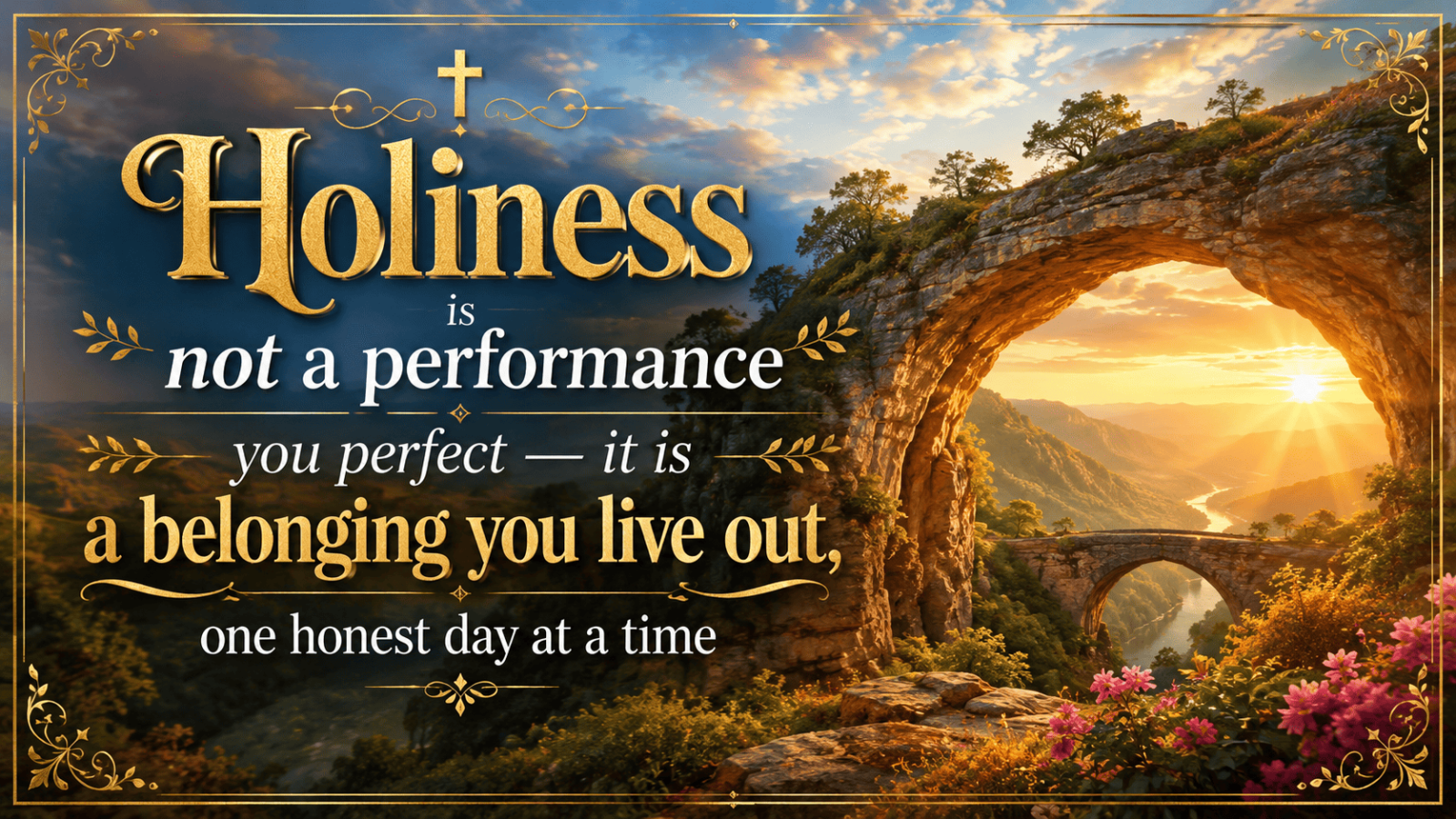
Holiness is being set apart for God — shaped by His character, not just following rules. It means your life is oriented toward Him in thought, habit, and love. Scripture calls every believer to this, not because perfection is required today, but because God Himself is holy and invites you closer.
The Word Itself: What ‘Holy’ Actually Means
The Hebrew word behind ‘holy’ in the Old Testament is qadosh, and the Greek word in the New Testament is hagios. Both carry the same core idea: set apart, distinct, other.
When the Bible calls God holy, it is saying He is entirely unlike anything else in existence. He is not simply a more powerful version of us. He is in a category of His own — perfect in love, truth, justice, and goodness.
When God calls you to be holy, He is inviting you into that same category of ‘set apart.’ Not set apart in the sense of being weird or disconnected from the world, but set apart in purpose, direction, and character — belonging to Him.
Holiness Is Not the Same as Perfection
This is worth saying clearly, because many people quietly believe that holiness is a finish line only perfect people cross. It is not. Holiness in the Bible is both a position and a process.
Your position: the moment you trust in Christ, you are declared holy — set apart and made clean through His work, not your own (see Colossians 1:22 and Hebrews 10:10). Theologians sometimes call this ‘positional holiness’ or ‘sanctification.’
Your process: you are then invited to grow into that identity every day. First Peter 1:15 does not say ‘be perfect in all your behavior’ — it says ‘be holy in all of your behavior.’ The call is to orientation, not arrival. You are moving toward God, and that movement itself is holiness taking shape in a life.
What Does Holiness Look Like in an Actual Day?
Holiness shows up in small, practical choices. It is the moment you pause before you speak harshly. It is returning to honesty when dishonesty would be easier. It is the way you treat someone who cannot do anything for you.
Romans 12:1-2 describes it as presenting your whole self to God — your body, your time, your attention — as an act of worship. Holiness is not confined to Sunday mornings or prayer closets. It extends into your work, your rest, your relationships, and your private thoughts.
This does not mean you will handle every situation perfectly. It means you are consistently asking a different question than the world does: What does God call good here? That question, asked honestly and often, is a holy habit.
Why God Grounds the Command in His Own Character
Notice the reasoning in 1 Peter 1:16: ‘You shall be holy; for I am holy.’ God does not say ‘be holy so that you will be impressive’ or ‘be holy to earn my favor.’ He says be holy because that is what He is, and He made you to reflect Him.
This is important for how you receive the call. It is not a threat. It is an invitation into resemblance. A child raised in a loving home naturally begins to carry the habits and values of the parent. God is your Father, and holiness is the family likeness.
When you feel distant from holiness — when you have failed, when sin has felt more comfortable than obedience — the answer is not to earn your way back through effort alone. The answer is to return to the One who is holy, and let His presence reshape you again (see 1 John 1:9).
Holiness and the Holy Spirit
You were not designed to pursue holiness on willpower alone. That is precisely why God’s Spirit is called the Holy Spirit. The Spirit of God, living in every believer, is the agent of the holiness you are being called to (see Galatians 5:22-23 and 2 Thessalonians 2:13).
This means your first move is not to try harder — it is to stay connected. John 15:4-5 uses the image of a branch and a vine. A branch does not strain to produce fruit; it stays attached to the source. Prayer, Scripture, worship, community — these are not boxes to check. They are the ways you stay attached.
When you notice unholy patterns in your life — anger, dishonesty, habits you are ashamed of — bring them honestly to God. The Holy Spirit convicts, but He convicts to restore, not to condemn (see Romans 8:1). There is a difference between guilt that leads you back to God and shame that only drives you away from Him.
A Word If This Feels Overwhelming
Some people read about holiness and feel immediately exhausted or discouraged. If that is you, please hear this: the call to holiness is a call to walk with someone, not to perform for someone.
God is not watching your life with arms crossed, waiting for you to achieve a holiness score. He is a father running toward a returning child (see Luke 15:20). The call to be holy is extended by the same voice that said ‘come to me, all who are weary’ (Matthew 11:28).
If you are walking through grief, anxiety, illness, or exhaustion, those things are not evidence of a failed spiritual life. Suffering is real, and pursuing holiness in the middle of it looks like trusting God in the dark — which is its own profound form of being set apart. Professional counseling and pastoral care belong together with prayer, and reaching for both is wisdom, not weakness.
How to Begin — or Begin Again — Today
If you are new to faith, beginning with holiness is simple: ask God to be Lord of your life, and then give Him one specific area this week. One relationship. One habit. One recurring choice. Offer it to Him honestly.
If you have been a believer for years and holiness has become abstract or exhausting, consider going back to gratitude as a foundation. Psalm 100:3 reminds us that He made us and we belong to Him. Starting there — not with duty, but with belonging — often reorients everything.
Read 1 Peter 1:13-21 slowly this week. Let the context of that passage wash over you. Holiness is set in the middle of hope, of grace, of a God who called you knowing everything about you. That is where it belongs — not in a list of rules, but in a love story.
Tell God honestly where holiness feels far away from you right now — name the specific habit, pattern, or area of your life. Ask Him to meet you there, not after you have cleaned it up, but right now.
Thank God for the areas where you have already seen change — moments where you responded differently than you once would have. Acknowledge that those moments came from His Spirit, not only your effort.
Ask the Holy Spirit to make you sensitive this week — to the small choices, the quiet nudges, the moments where the holy path and the easy path diverge. Ask for the desire to choose well, not just the ability.
Bring any fear or shame you associate with the word ‘holiness’ into the open before God. Ask Him to replace the picture of an impossible standard with the true picture: a Father inviting you to look more and more like the family you belong to.
Frequently Asked Questions
Is holiness only for pastors and missionaries, or is it for ordinary people?
Holiness is called for in every believer without exception — 1 Peter 1:15 uses the word ‘you,’ addressed to ordinary Christians scattered across a difficult world. It is not a higher tier of Christianity reserved for full-time ministry workers. Every person who follows Christ is invited, and equipped by the Holy Spirit, to live a set-apart life in whatever ordinary circumstances they occupy.
What is the difference between holiness and self-righteousness?
Holiness is rooted in God’s character and flows from a relationship with Him; self-righteousness is rooted in comparison with other people and flows from pride. A holy person is increasingly aware of how much they need God. A self-righteous person is increasingly convinced they do not. The fruit of genuine holiness, according to Galatians 5:22-23, includes humility, gentleness, and love — not contempt for others.
Does being holy mean I have to avoid everything in the world?
Being holy means being set apart in purpose and character, not physically removed from the world. Jesus himself ate with tax collectors, touched lepers, and spent time with people religious leaders avoided — and He was perfectly holy. The call is to be in the world as a person shaped by God’s values, bringing light rather than being reshaped by darkness (see John 17:15-17).
What if I keep failing at the same sin — can I still be called holy?
Yes. Holiness is both a declaration God makes over you through Christ and a direction your life is moving — it is not a streak you maintain. Persistent struggle with a specific sin is something most believers know firsthand. The path forward is honest confession (1 John 1:9), accountability with a trusted believer or counselor, and returning to the source of holiness rather than giving up on the pursuit.
How is holiness related to love? They seem like different ideas.
They are inseparable. God is described as both holy and love throughout Scripture, and in His character those two things are never in conflict. Holiness without love becomes cold rule-keeping; love without holiness becomes a sentiment that never changes anything. In practice, growing in holiness means growing in your capacity to love God and other people well — Jesus himself called love the summary of the whole law (Matthew 22:37-40).
Continue Reading

The Power of a Changed Life: What We Can Learn From the Woman at the Well?
What does John 4:28–29 mean? Discover how one encounter with Jesus transformed the Samaritan woman and learn why your testimony has the power to lead other

What Does the Bible Say About Tithing? The Truth About Tithing and Stewardship
Wondering what is tithing and what the Bible really says about it? This plain, pastoral guide walks seekers and new believers through scripture, history…
What Does the Bible Say About Generosity? A Plain Guide for Seekers and New Believers
Wondering what the Bible says about generosity? This plain-language guide explores key scriptures, practical steps, and a short prayer guide for seekers…