Where Should I Start Reading the Bible? A Gentle Guide for New Readers
6 min read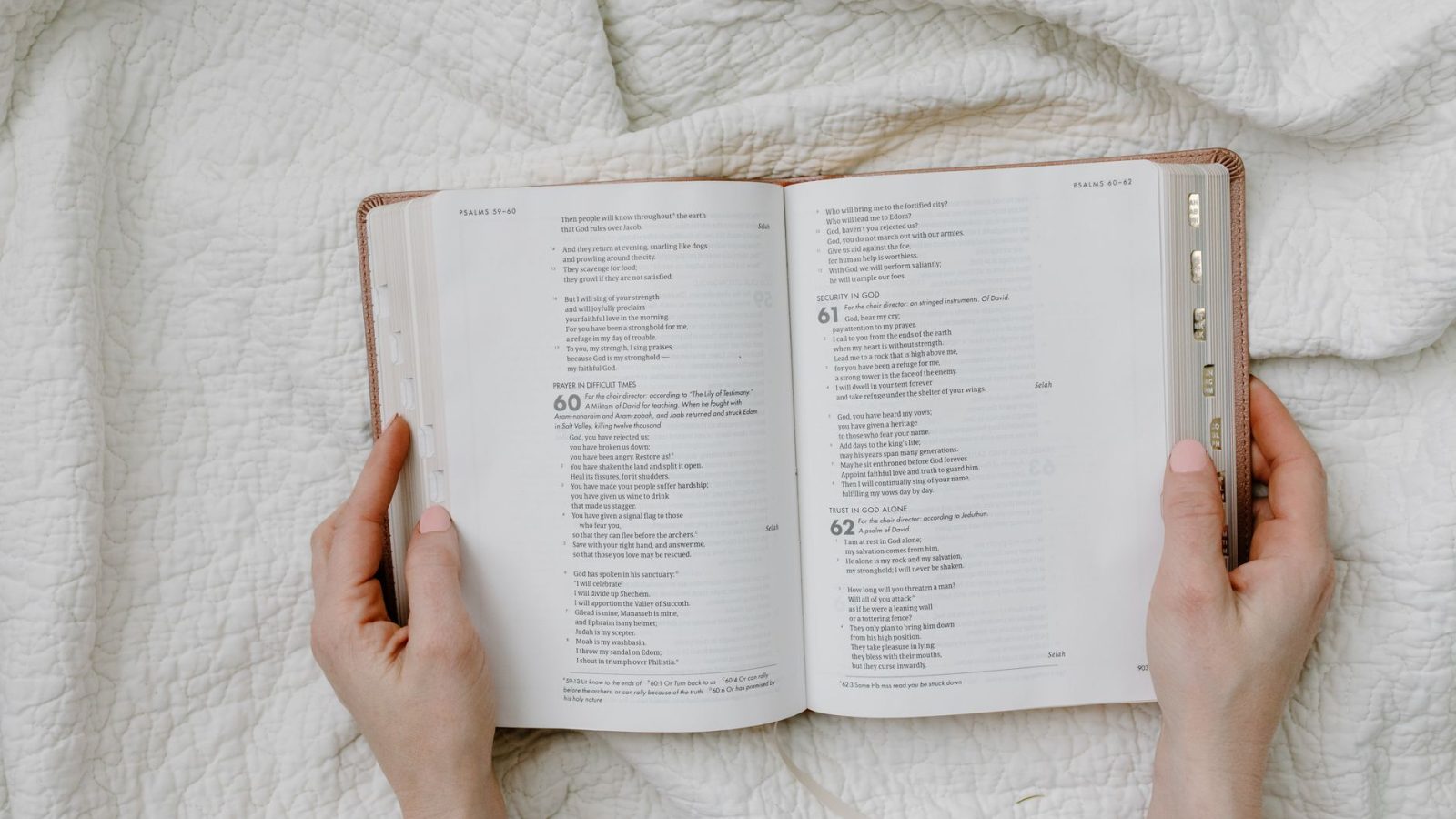
Start with the Gospel of John if you want to meet Jesus immediately, or the Gospel of Mark if you prefer a fast-moving story. New believers often find Psalms helpful for prayer and Proverbs for daily wisdom. There is no single wrong place to begin.
Why the Beginning of the Bible Is Not Always the Best Beginning
Genesis is a magnificent book, but it was not written as an on-ramp for seekers. Starting at Genesis 1 and reading straight through means you will hit long genealogies, detailed construction plans for a portable tent-temple, and layers of ancient law before you reach the person most people are actually searching for.
That does not mean Genesis is unimportant. It means the Bible is a library, not a single novel. It holds poetry, history, prophecy, letters, and biography across sixty-six books written over more than a thousand years. You are allowed — encouraged, even — to start somewhere in the middle.
Think of it the way you might approach a new city. You do not have to drive every street before you can call it home. You start with the neighborhood where someone you trust lives, and the rest opens up from there.
The Gospel of John: Start Here If You Want to Meet Jesus
Most pastors, spiritual directors, and Bible teachers recommend the Gospel of John as the single best starting point for a new reader. John was written specifically so that readers would believe — its purpose is stated plainly near its end at John 20:31.
John moves at a thoughtful pace. It gives you long conversations Jesus had with real people: a religious leader asking questions at night, a woman at a well in the middle of the day, a grieving family outside a tomb. These are the kinds of scenes you can sit with.
John also opens with one of the most important theological sentences in Scripture, found at John 1:1. You do not need to understand it fully on your first read. Read it slowly, move on, and come back. The Bible rewards returning.
Plan to read one chapter a day. John has twenty-one chapters, so you can finish it in three weeks at an easy pace. Keep a simple notebook nearby and write down any verse that surprises you or makes you want to ask a question.
The Gospel of Mark: Start Here If You Want a Fast Story
Mark is the shortest of the four Gospels and the most urgent. It reads almost like a news dispatch — something is always happening, and the word “immediately” appears so often it becomes its own kind of rhythm.
If long, reflective passages feel difficult right now, Mark’s pace may suit you better. You can read the entire Gospel in a single sitting of about an hour and a half, or spread it across sixteen days, one chapter at a time.
Mark does not slow down much to explain things. That is part of its power. You feel the momentum of Jesus moving through towns, healing people, confusing authorities, and ultimately walking toward Jerusalem with a purpose that no one around him fully understood yet.
Psalms: Start Here If You Need Words for What You Are Feeling
The Psalms are the Bible’s prayer book. They were sung and spoken by people who were grieving, afraid, grateful, angry, and desperate — sometimes all at once. If you are coming to the Bible because life is hard right now, the Psalms will not feel foreign.
Psalm 23 is perhaps the most recognized passage in the entire Bible, and for good reason. Psalm 46 speaks to those who feel the ground shifting. Psalm 139 addresses the fear that you are somehow hidden from God or beyond reach. These are not abstract theological arguments. They are honest cries from real people.
You do not have to read the Psalms in order. Look at a table of contents, pick a number between 1 and 150, and start there. Give yourself permission to read the same Psalm two days in a row if it said something you needed to hear twice.
Reading Psalms alongside whichever Gospel you choose gives you two different textures of Scripture at the same time — story and prayer, history and feeling.
A Simple Reading Plan You Can Actually Keep
The best reading plan is the one you will actually use. A chapter a day is a reasonable starting point for most people. That is roughly five to fifteen minutes of reading, depending on the chapter.
Consider this simple four-week starter path: Week one and two, read the Gospel of Mark. Week three, read ten Psalms of your choosing — five that sound hopeful and five that sound like honest trouble. Week four, begin the Gospel of John and read as far as you get.
After that month, you will have read two accounts of Jesus’s life, prayed alongside ancient poets, and developed a real feel for what the Bible is. From there, many readers add the book of Romans for theological grounding, or the book of Acts to understand the early church.
You do not need a color-coded system or a special highlighter. A pen and a consistent ten minutes matter more than the perfect method.
What to Do When the Bible Confuses You
Confusion is not a sign that you are reading wrong. It is a sign that you are reading something ancient, translated, and layered with thousands of years of context. Every serious Christian who ever lived has been confused by Scripture at some point.
When you hit a passage that stops you, write the reference down and keep moving. You are not required to solve every difficulty before you continue. Understanding accumulates over time, not all at once.
A few practical helps: A readable modern translation like the World English Bible (WEB), the New Living Translation, or the Christian Standard Bible reduces translation barriers without distorting meaning. A simple study Bible with brief margin notes can answer “who is speaking and why” questions without overwhelming the text itself.
Joining a small group, a Sunday school class, or even an online Bible study community gives you other readers to think alongside. Faith has always been communal. You were never meant to figure it all out alone.
A Note on Coming to the Bible in Hard Seasons
Some people find the Bible for the first time in grief. Some arrive through anxiety, or a diagnosis, or a relationship that fell apart. If that is your story, please know: the Bible is not a self-help formula, and reading it faithfully does not guarantee that your circumstances will change in the way you hope.
What Scripture does offer is presence — the repeated, gentle insistence across every Testament that God is near to the brokenhearted (Psalm 34:18) and that nothing can separate a person from divine love (Romans 8:38-39). That is not a small thing, but it is not a transaction either.
If you are carrying grief, trauma, or a mental health struggle, please let Scripture and professional support exist together. Therapy, counseling, and medical care are not opposites of faith. They are part of caring for the whole person God made you to be.
Lord, I am holding this book and I am not sure where to begin. Would you meet me here, in the uncertainty, before I even turn the first page.
Open my eyes to see what you want me to see today. I am not asking to understand everything — just enough light for the next step.
When I read something I do not understand, keep me from discouragement. Remind me that you are patient with seekers, and that confusion is not the same as failure.
As I read, make these words more than words to me. Let them find the places in me that need to hear them most.
Frequently Asked Questions
Is it okay to skip around in the Bible instead of reading it straight through?
Yes, absolutely. The Bible is a collection of different kinds of writing, and there is no rule that requires you to read it cover to cover before it becomes meaningful. Many experienced readers spend years moving between Gospels, Psalms, and letters depending on what they need. Reading a passage deeply is more valuable than racing through books you are not ready for.
Which Bible translation is easiest for a first-time reader?
The New Living Translation (NLT) and the Christian Standard Bible (CSB) are widely recommended for new readers because they use clear, contemporary language without sacrificing accuracy. The World English Bible (WEB) is a solid public-domain option available free online. Avoid archaic translations like the King James Version as your primary starting point unless the older language feels natural to you.
How long should I read the Bible each day when I am just starting out?
Ten to fifteen minutes a day is a strong and sustainable starting point. One chapter per sitting gives you a natural stopping place and enough content to reflect on without becoming overwhelming. Consistency over several short months will teach you far more than an intense week followed by a long break.
Do I need to read the Old Testament to understand the New Testament?
You do not need to read the Old Testament first, but it deepens everything in the New Testament considerably. Start with the Gospels and then, when you feel ready, explore books like Genesis, Exodus, and the Psalms to build that background. Many readers find that the Old Testament makes more sense after they know Jesus’s story, because the New Testament writers quote and reference it constantly.
What if I start reading the Bible and I have doubts or hard questions?
Doubt and sincere questioning have always had a place within Christian faith. Bringing your real questions to the text is more honest — and ultimately more fruitful — than pretending they are not there. Consider finding a pastor, a campus minister, or a trusted Christian friend you can ask. Books by authors like C.S. Lewis or Tim Keller are also known for taking intellectual questions about faith seriously.
Continue Reading

The Power of a Changed Life: What We Can Learn From the Woman at the Well?
What does John 4:28–29 mean? Discover how one encounter with Jesus transformed the Samaritan woman and learn why your testimony has the power to lead other
What Does the Bible Say About Tithing? The Truth About Tithing and Stewardship
Wondering what is tithing and what the Bible really says about it? This plain, pastoral guide walks seekers and new believers through scripture, history…
What Does the Bible Say About Generosity? A Plain Guide for Seekers and New Believers
Wondering what the Bible says about generosity? This plain-language guide explores key scriptures, practical steps, and a short prayer guide for seekers…