What Can We Learn From Joseph? Seven Lessons From a Life God Refused to Waste
7 min read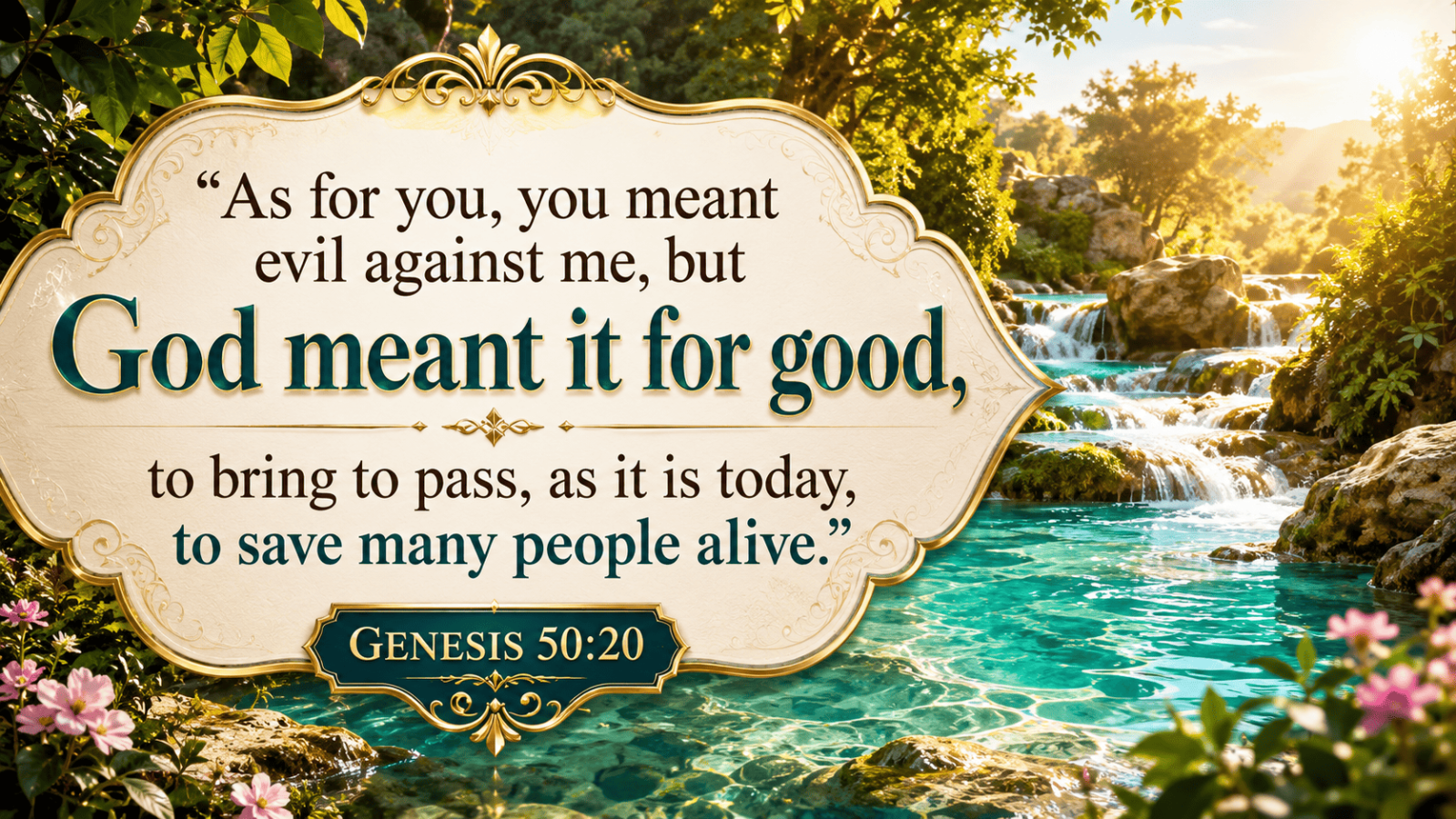
From Joseph we learn that God can redeem betrayal, suffering, and delay without wasting a single day of your pain. His story teaches faithfulness in hidden seasons, integrity under pressure, forgiveness as a choice, and trust that God’s purposes outlast any person’s cruelty.
God Does Not Waste the Pit
Joseph’s brothers threw him into a cistern before selling him to slave traders. That is not a metaphor — it was a real hole in the ground, and he was alone in it while his brothers ate a meal nearby (Genesis 37:24–25). If you have ever felt discarded by people who were supposed to love you, Joseph knows that feeling from the inside.
The pit did not end Joseph’s story. It began the sequence that eventually placed him in a position to save thousands of lives, including the very brothers who sold him. This is not a promise that your pit will resolve the same way, or on the same timeline. It is a promise that God is present in the pit, even when you cannot feel him there.
You do not have to perform peace you do not have. Joseph likely wept in that cistern. Lament is honest prayer, and honest prayer is still prayer. If you are in a pit right now — relational, financial, physical, emotional — you are allowed to say so to God plainly.
Integrity Is Possible Even When No One Is Watching
When Joseph arrived in Egypt as a slave, he served Potiphar faithfully — not because faithfulness was convenient, but because it was who he chose to be (Genesis 39:2–6). No one in Canaan could see him. His reputation at home was already in ruins. He had every excuse to coast.
Then came Potiphar’s wife. Repeated pressure. A private moment. And Joseph refused — not once, but consistently over time (Genesis 39:7–10). He gave a reason rooted in his relationship with God, not merely in personal preference. That is the mark of character that has a foundation.
What can we learn from Joseph here? Your private choices shape the person you become in public. Integrity is not about being seen. It is about being the same person in the empty room that you are when the room is full. That is hard. Joseph makes no pretense that it was easy — he ran from the house to avoid the situation (Genesis 39:12).
If you are struggling with a private temptation right now and feel ashamed about it, that shame does not have to be the end of the conversation. Bring it to God. Talk to a trusted pastor or counselor. The struggle itself is not failure.
Unjust Suffering Is Real — and It Is Not Your Fault
After Joseph did everything right, he was falsely accused and thrown into prison (Genesis 39:19–20). Read that again slowly. He honored God. He resisted temptation. He was imprisoned anyway.
This matters enormously for how we read Joseph’s life — and how we read our own. The Bible does not teach that faithfulness protects you from injustice. It teaches that God is with you inside the injustice (Genesis 39:21). Those are very different promises.
If you are suffering something you did not cause and do not deserve, please hear this gently: your pain is not evidence of weak faith or divine punishment. Suffering has many causes, and the Christian life was never described as a path around it. If your suffering is connected to grief, anxiety, illness, or trauma, professional support and prayer belong together — one does not cancel the other.
Joseph’s prison years are not skipped in the text. They are honored with detail. God does not fast-forward past your hard seasons either.
Use the Gifts You Have, Right Where You Are
Even in prison, Joseph used what God had given him. When two of Pharaoh’s officials had disturbing dreams, Joseph did not wait for a better setting or a more impressive audience. He interpreted their dreams and asked to be remembered (Genesis 40:8–14).
He was not remembered right away. Two full years passed before the cupbearer mentioned him to Pharaoh (Genesis 41:1, 9). Two years of waiting after doing the right thing. If you are in a season of serving faithfully without visible result, Joseph’s calendar is a quiet companion.
When Pharaoh’s dreams finally brought Joseph out of prison, he was ready — not because he had planned for that moment, but because he had been faithful in all the smaller moments leading to it. Preparation is not wasted even when promotion is delayed.
Forgiveness Is a Decision Before It Is a Feeling
Years later, when Joseph’s brothers stood before him — desperate, not yet knowing who he was — Joseph wept. Multiple times. He wept in private before revealing himself, and he wept when he finally did (Genesis 45:1–2). Forgiveness in the Bible is never portrayed as emotionless. It costs something.
But Joseph chose it. When he revealed himself, he did not launch into an accusation. He asked if his father was alive. He told his brothers not to be grieved (Genesis 45:4–5). That is remarkable self-possession from a man who spent years in slavery and prison because of these same people.
Genesis 50:20 — the anchor of this entire reflection — arrives after Jacob dies, when the brothers fear that Joseph’s kindness was conditional on their father’s life. His response is one of the most theologically dense sentences in the Old Testament. He does not minimize what they did. He calls it evil. But he also locates it inside a larger purpose that God was working.
This is not toxic positivity. Joseph is not saying that what happened to him was fine. He is saying that God’s goodness was operating inside and through events that were genuinely unjust. That is a very different claim — and a harder, more honest one. You can name something as wrong and still trust that God was not absent.
How to Hold Both Truth and Trust at Once
Perhaps the deepest lesson from Joseph’s life is that these two things coexist: things can be genuinely terrible, and God can be genuinely at work. You do not have to choose between honesty about your pain and trust in God’s presence.
Joseph did not have a Bible. He did not have the New Testament. He did not have the resurrection yet. He had years of experience watching God show up in unlikely places — in a pit, in a prison, in a foreign palace. His theology was built in the dark, one small act of faithfulness at a time.
Your faith does not need to be neat to be real. You can carry questions and carry trust at the same time. Joseph did. That is part of what makes his story feel so human, and so worth sitting with.
Seven Practical Lessons to Carry Forward
Here is a plain list of what Joseph’s life teaches, gathered for anyone who wants something concrete to hold onto.
1. God is present in your worst moments, not just your best ones. 2. Integrity in private shapes character in public. 3. Injustice is real, and suffering is not always your fault. 4. Use what you have been given, even in limited circumstances. 5. Waiting is not the same as being forgotten. 6. Forgiveness is a decision you make before the feeling arrives. 7. God’s purposes can work through human cruelty without endorsing it.
None of these lessons promises an easy road. Joseph’s life was not easy. But it was purposeful — and that is a different and better thing.
Lord, I am honest with you about where I am right now — even if that place feels like a pit. I trust that you are here with me in it, even when I cannot feel you.
Give me the strength to act with integrity in the moments no one sees. Let who I am in private be someone I am not ashamed of in the light.
Where I have been hurt by someone who should have protected me, I bring that pain to you. I am not ready to force a feeling I do not have, but I am willing to be made willing. Begin the work of healing in me.
Help me trust that my waiting is not your forgetting. Show me how to use what I have been given, right where I am, while I wait for what you are preparing.
Frequently Asked Questions
What is the main lesson from Joseph's story in the Bible?
The main lesson is that God can work redemptive purposes through painful and unjust circumstances without those circumstances being any less real or wrong. Joseph’s life shows that faithfulness in hidden seasons, integrity under pressure, and forgiveness rooted in God’s larger purposes are all possible — even when life feels broken. Genesis 50:20 captures it: what people intend for harm, God can redirect toward life.
How does Joseph's story apply to my life today?
If you have experienced betrayal, injustice, a long waiting season, or the temptation to give up on integrity when no one is watching, Joseph’s life speaks directly to those experiences. His story does not promise an identical outcome, but it does promise that God is present inside difficult seasons — not just after them. You can bring your specific situation to God in prayer and ask for the same faithfulness Joseph practiced one day at a time.
What does Genesis 50:20 mean?
Genesis 50:20 is Joseph speaking to his brothers after their father Jacob dies. They feared he would punish them now that Jacob was gone, but Joseph instead named both truths simultaneously: their actions were evil, and God used those actions to accomplish a life-saving purpose. It is not a claim that cruelty is secretly good — it is a claim that God’s redemptive power is greater than human sin. Many Christians find this verse a foundation for trusting God during suffering.
Is Joseph's story meant to teach prosperity or guaranteed success?
No. Joseph spent years in slavery and additional years in prison before his circumstances changed. The Bible does not promise that faithfulness leads to material success or a fast resolution to suffering. What Joseph’s story does promise is that God remains present and purposeful across long, difficult seasons — and that character formed in hardship is real and lasting. Be cautious of any teaching that frames Joseph’s elevation as a formula for wealth.
How can I forgive someone who hurt me badly, the way Joseph forgave his brothers?
Joseph’s forgiveness came after years, not immediately — and it included real emotion, not just a decision. A helpful starting point is distinguishing forgiveness from reconciliation: forgiveness is releasing the debt someone owes you before God, while reconciliation requires the other person’s repentance and is not always safe or possible. If the hurt is deep, a counselor or trusted pastor can walk alongside you in that process. Prayer is not a replacement for that support — both belong together.
Continue Reading

Nothing Compares to Knowing Jesus: What Can We Learn From Paul? Seven Lessons That Still Change Lives
Discover what can we learn from Paul — seven practical, biblical lessons from his life and letters for seekers and new believers starting their faith…

How Do I Stay Faithful to God? A Practical Guide for Seekers and New Believers
Wondering how to stay faithful to God? This practical biblical guide offers honest, grace-filled steps for seekers and new believers — starting exactly…

Jesus’ Powerful Warning About Heaven, Hell, and the Final Judgment: What Does the Bible Say About Hell?
What does Matthew 25:46 mean? Discover what Jesus teaches about eternal life, the final judgment, and why your response to Him matters for eternity.